12 Timeless Vintage Thanksgiving Tablescapes for a Warm, Nostalgic Dinner
There’s a particular quiet that settles over a table set with old things. A gravy boat that has seen forty Thanksgivings. Napkins someone’s great-aunt embroidered by lamplight. A silver spoon worn thin on one side from decades of serving mashed potatoes. These pieces carry stories, and they make a holiday meal feel slower and more personal.
Still, a lot of hosts shy away from vintage styling. The worry is always the same. Will mismatched plates look like I couldn’t find a full set? Will the tarnished silver just look dirty?
Here’s what years of estate sales have taught me. Real vintage charm comes from gentle patina, layered textures and a little imperfection. Nobody needs a matching 24-piece set from a department store. What you need is a loose color story and a few rules about how the pieces talk to each other.
So here are 12 vintage Thanksgiving tablescapes built from thrifted, collected and inherited pieces, with the layering steps and flea market tricks that make them work at a real dinner.
The Curated, Not Cluttered Vintage Styling Formula
Swipe sideways on mobile to see the full table.
| Vintage Tableware Element | The Golden Pairing Rule | Common Mistake to Avoid |
|---|---|---|
| Mismatched Transferware | Stick to one ink color, like brown, red or blue, and mix the patterns freely | Mixing three ink colors at once, which reads as chaos |
| Colored Depression Glass | Pick one glass color and repeat it at every seat | Rainbow glass on top of busy floral plates |
| Tarnished Silverplate | Pair with matte linen and stoneware so the soft gleam stands out | Polishing it to mirror shine, which loses the old soul |
| Antique Embroidered Linens | Let them be the one pattern and keep plates plain cream or white | Covering the embroidery with chargers and centerpieces |
12 Vintage Thanksgiving Tablescape Ideas
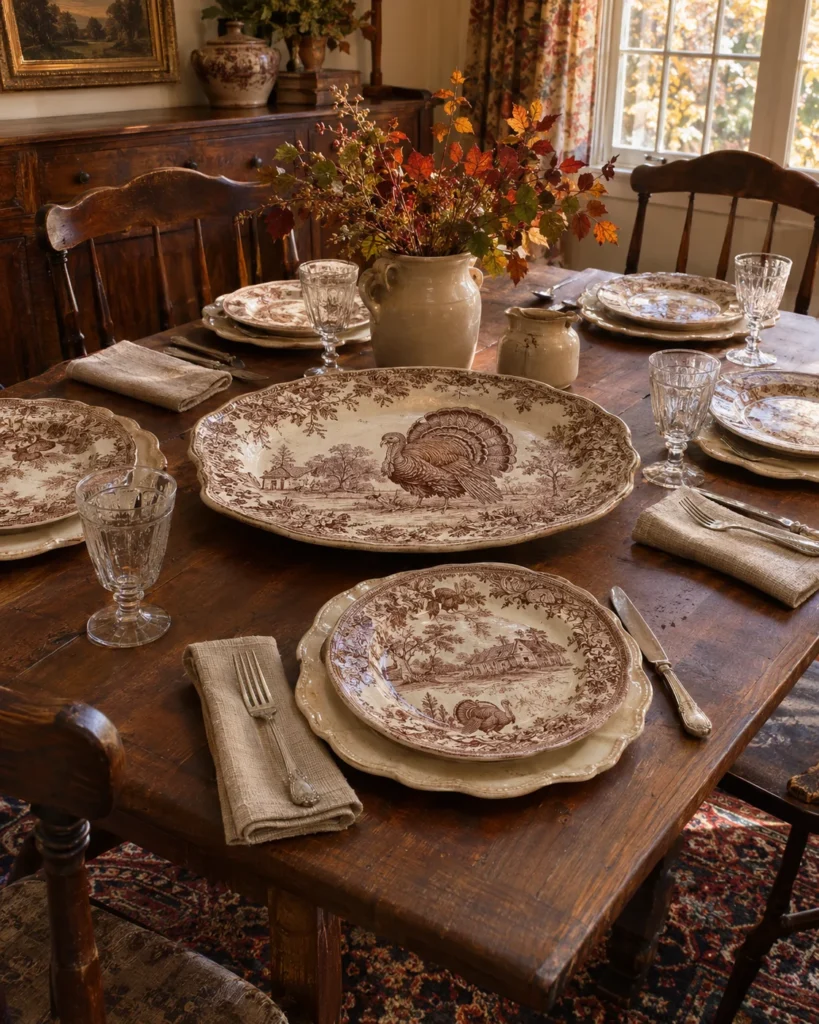
1. Sepia English Transferware on Heavy Scalloped Chargers
Era · 1800s to 1950s
The Look and Era Aesthetic: Brown and cream plates printed with turkeys, pastoral farms and hunting scenes, resting on chunky scalloped chargers. It feels like a manor house harvest supper, softened by a century of use.
Table Elements to Hunt For:
- Brown or sepia transferware dinner plates in any pattern
- Cream or wood scalloped chargers
- One transferware turkey platter as the showpiece
- Oatmeal linen napkins
The Layering Technique:
- Set the charger about an inch from the table edge.
- Rotate patterns around the table so no two neighbors match.
- Fold the napkin into a long rectangle and lay it to the left of the charger, so the plate pattern stays visible.
Thrifting and Practical Tip: Search “brown transferware,” “Johnson Brothers His Majesty” or “Staffordshire turkey plate” at flea markets and online. Single plates are far cheaper than sets, which is perfect because mismatched is the whole point.
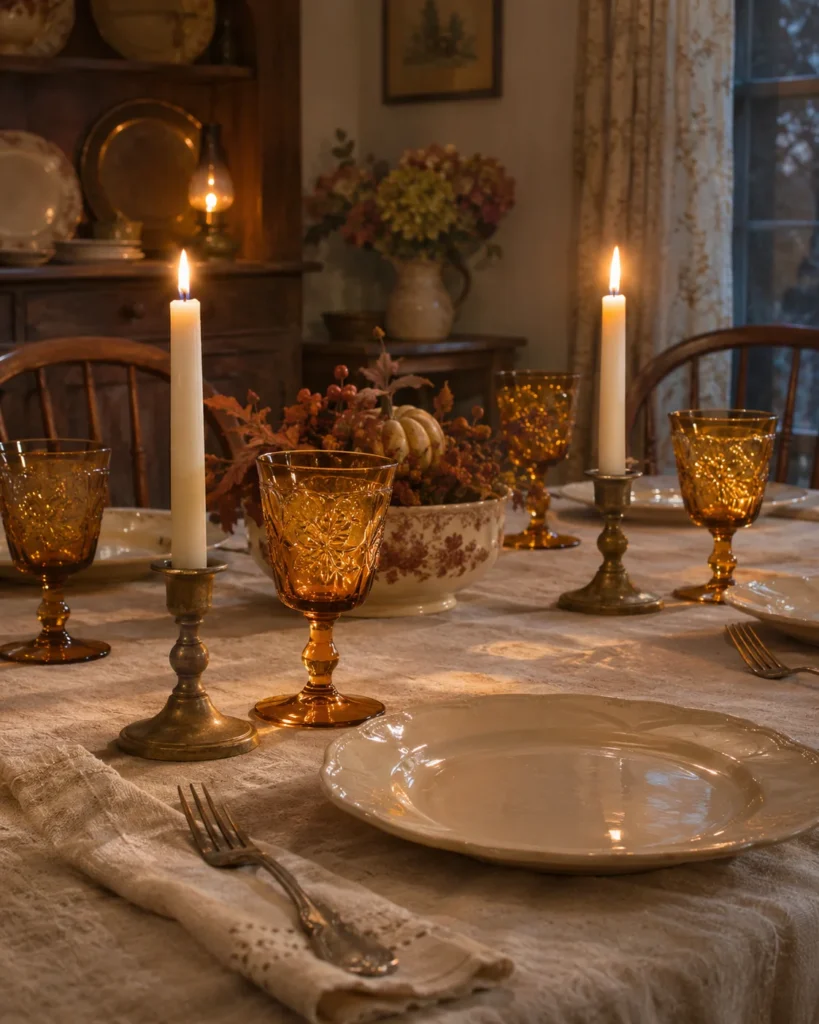
2. Amber Depression Glass Goblets With Unlacquered Brass Tapers
Era · 1930s
The Look and Era Aesthetic: Pressed amber goblets catching the flicker of brass candlesticks, washing the table in a deep honey glow. It’s pure 1930s farmhouse warmth.
Table Elements to Hunt For:
- Amber depression glass goblets
- Unlacquered brass candlesticks in short heights
- Ivory taper candles, unscented
- Plain cream plates to let the glass glow
The Layering Technique:
- Place a goblet just above each knife.
- Group candlesticks in pairs down the center, every 18 inches or so.
- Light the tapers and dim the overhead. The glass does the rest.
Thrifting and Practical Tip: Search “amber pressed glass goblet,” “Indiana Glass amber” or “Federal Glass amber.” Run your finger around each rim before buying, since tiny chips are easy to miss and uncomfortable to drink from.
3. Wooden Butter Molds and Stoneware Crocks With Foraged Herbs
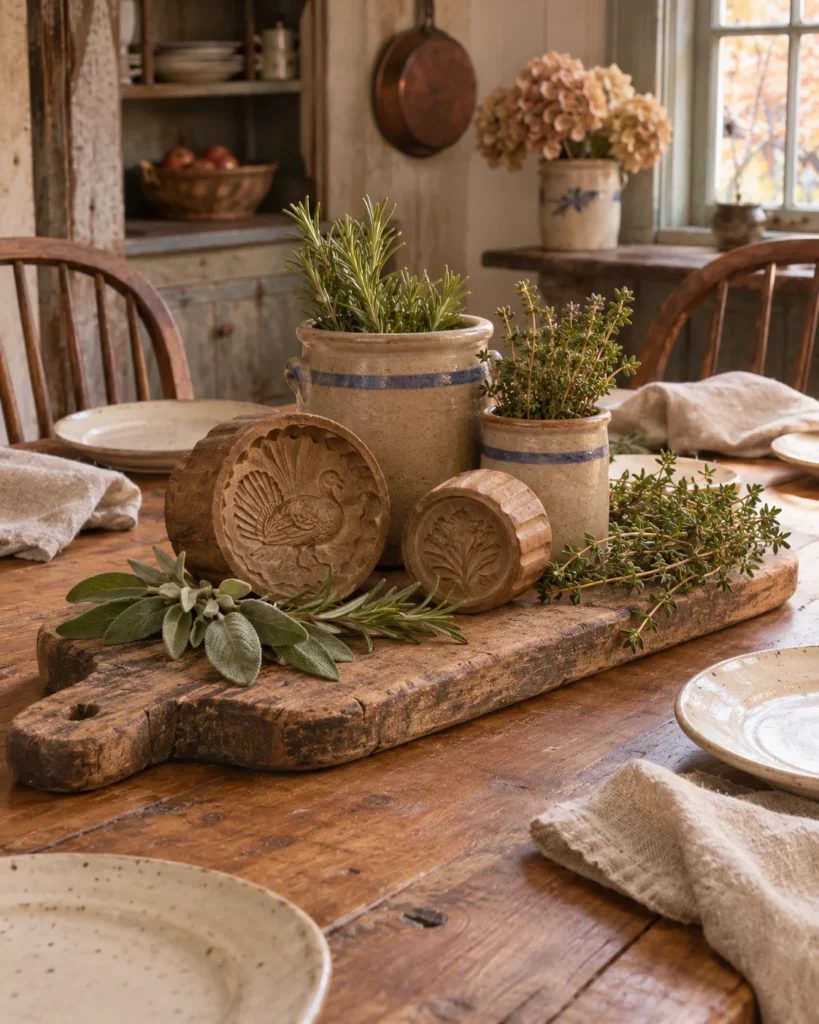
Era · 1880s to 1920s
The Look and Era Aesthetic: Carved wooden butter stamps and salt-glazed crocks clustered with sprigs of sage, thyme and rosemary. It feels like a working farmhouse kitchen around the turn of the century.
Table Elements to Hunt For:
- 2 or 3 carved wooden butter molds or stamps
- Small salt-glazed or blue-banded stoneware crocks
- Fresh herbs from the garden or market
- A worn breadboard as a base
The Layering Technique:
- Lay the breadboard at center.
- Set crocks in a loose triangle with herbs bunched inside, kept under 10 inches.
- Rest the butter molds on their sides in the gaps so the carvings show.
Thrifting and Practical Tip: Search “primitive butter stamp” or “salt glaze crock.” Never soak old wood. Wipe it with a damp cloth and rub in a little food-safe mineral oil so it doesn’t crack. For a similar low, layered arrangement, my fall tray decor ideas use the same board-first approach.
A friend once found a gorgeous set of pressed glass dessert plates at an estate sale, used them for pie on Thanksgiving, then loaded them straight into the dishwasher. Two came out cloudy and one cracked along an old seam. She still talks about it.
The fix: Hand wash every antique piece in lukewarm water with mild soap, and dry it right away. A dishwasher is the fastest way to ruin vintage glass.
4. Tarnished Silverplate Pitchers With Autumn Foliage and Bosc Pears
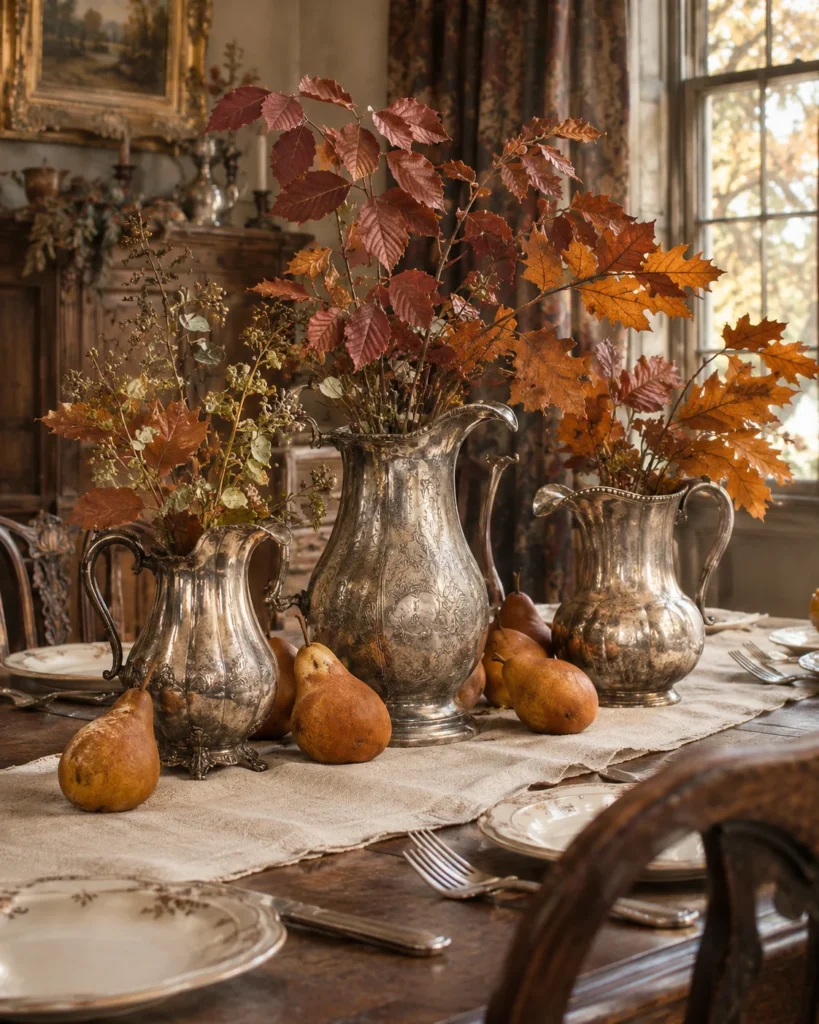
Era · 1890s to 1940s
The Look and Era Aesthetic: Soft, dark-edged silver pitchers spilling with copper beech and oak leaves, with russet pears scattered at their bases. The tarnish gives it a lived-in, old-money feel.
Table Elements to Hunt For:
- 2 or 3 silverplate water pitchers or creamers
- Short branches of autumn foliage
- Bosc pears
- A small glass jar to slip inside each pitcher
The Layering Technique:
- Set a water-filled jar inside each pitcher to protect the silver from water spots.
- Cut branches short so foliage arches out rather than up.
- Stagger pitchers down the table and tuck two or three pears around each.
Thrifting and Practical Tip: Search “EPNS pitcher” or “silverplate creamer,” since EPNS stamped on the base means electroplated nickel silver. Polish only the high points with a soft cloth and leave the tarnish in the crevices for depth.
5. Hand-Stitched Damask Linens With Calligraphy Place Cards
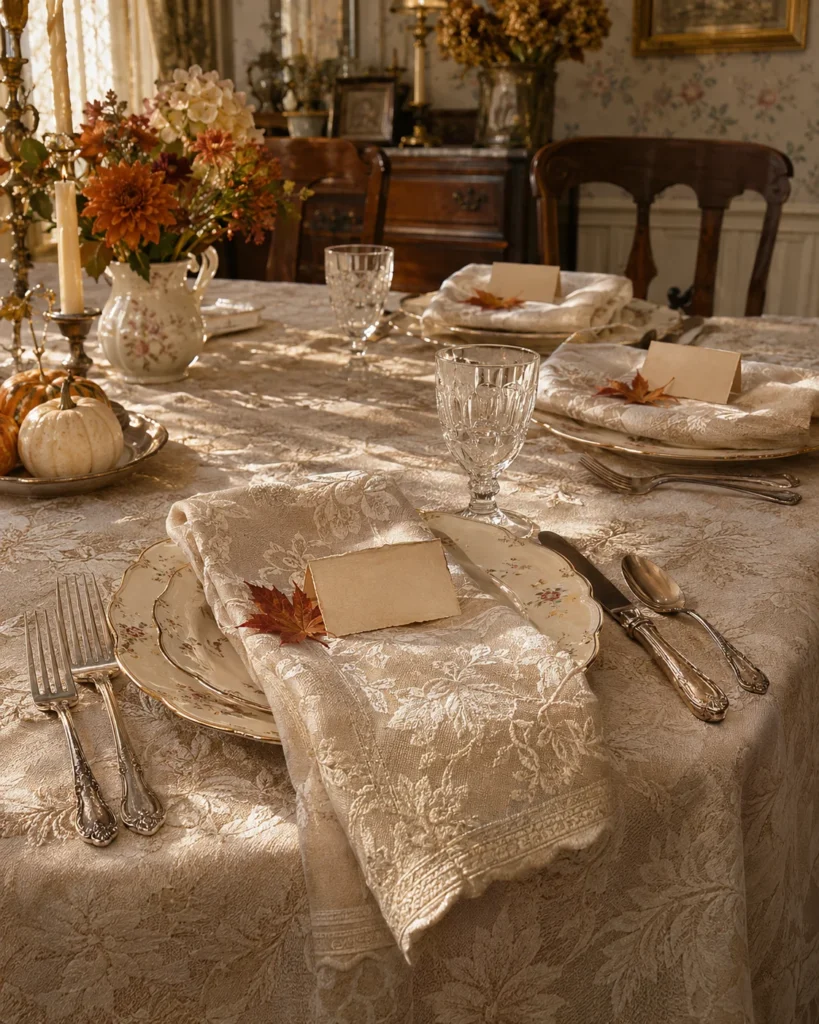
Era · 1920s to 1950s
The Look and Era Aesthetic: Heavy ivory damask with woven leaf patterns that shimmer as the light changes, paired with names written in looping ink. It feels formal but tender, like a table set for someone important.
Table Elements to Hunt For:
- An ivory or white damask tablecloth
- Matching or mismatched damask napkins
- Cream cardstock and a calligraphy pen
- Small dried leaves or wheat stems for each card
The Layering Technique:
- Iron the cloth slightly damp for crisp folds that show the pattern.
- Fold each napkin in thirds and lay it across the plate.
- Rest the place card on top with a leaf tucked into the fold.
Thrifting and Practical Tip: Search “linen damask tablecloth” or “vintage damask napkins lot.” To wash, soak in cool water with a gentle oxygen cleaner, never chlorine bleach, then line dry. Yellowed spots often lift after a day in the sun.
6. 1940s Forest Green Glassware With Raw Linen and Twine
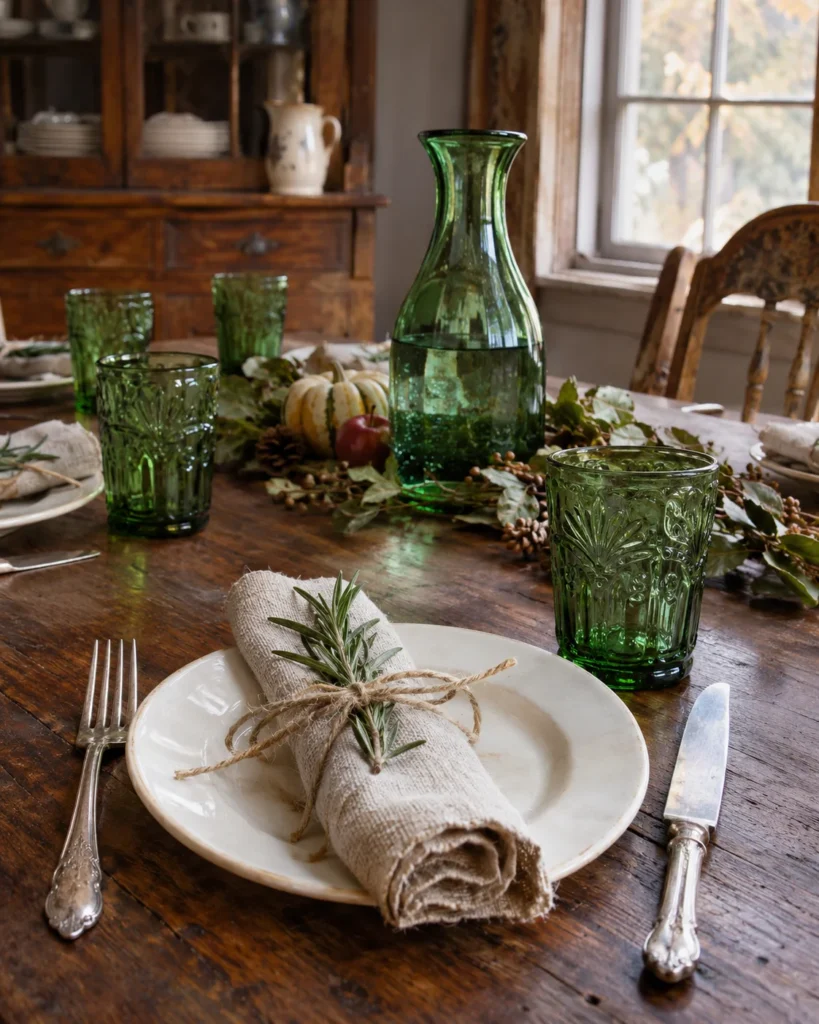
Era · 1940s
The Look and Era Aesthetic: Deep green tumblers and dessert cups beside rough flax napkins tied in plain twine. It’s thrifty, earthy and full of mid-century country character.
Table Elements to Hunt For:
- Forest green glass tumblers or goblets
- Raw linen napkins in oatmeal
- Natural jute twine
- Sprigs of bay or rosemary
The Layering Technique:
- Roll each napkin and tie it with twine and a herb sprig.
- Set it on a plain white plate.
- Place the green glass at the top right, and keep one green glass carafe at center for water.
Thrifting and Practical Tip: Search “forest green glass tumbler,” “Anchor Hocking forest green” or “Hazel Atlas green.” Short, heavy tumblers are far steadier than stemware when platters are being passed.
7. Antique Ironstone Tureens as Low Harvest Displays
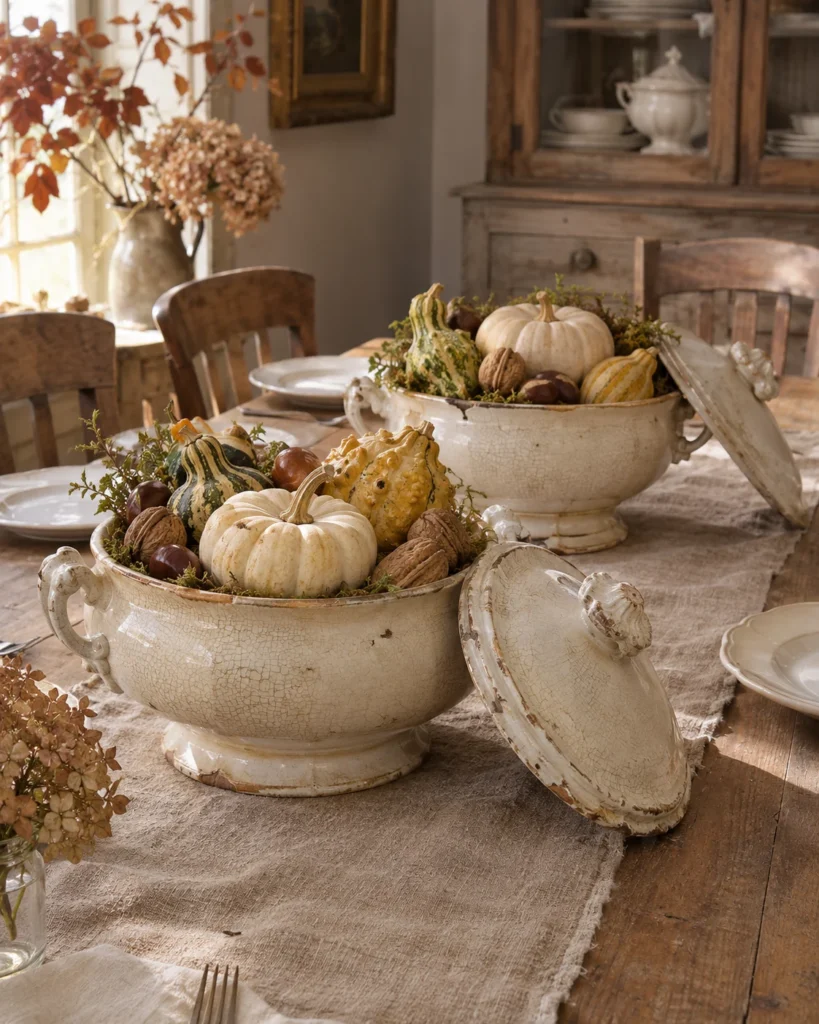
Era · 1850s to 1900s
The Look and Era Aesthetic: Chalky white ironstone tureens with their lids set aside, filled with small gourds, chestnuts and moss. Clean and simple, yet unmistakably old.
Table Elements to Hunt For:
- 1 or 2 ironstone vegetable tureens
- Mini gourds, chestnuts or walnuts
- Sheet moss
- The tureen lids, displayed beside them
The Layering Technique:
- Line each tureen with moss so nothing rolls.
- Mound gourds slightly above the rim.
- Lean the lid against the tureen at an angle. It looks collected rather than staged.
Thrifting and Practical Tip: Search “white ironstone tureen” or “Mason’s ironstone.” These pieces are heavy, so keep them near the table’s center and over the legs. Pair them with a calm arrangement from my neutral dining room centerpiece styling guide for an all-white table.
8. Pewter Candlesticks and Dark Floral Tea Plates for a Colonial Look
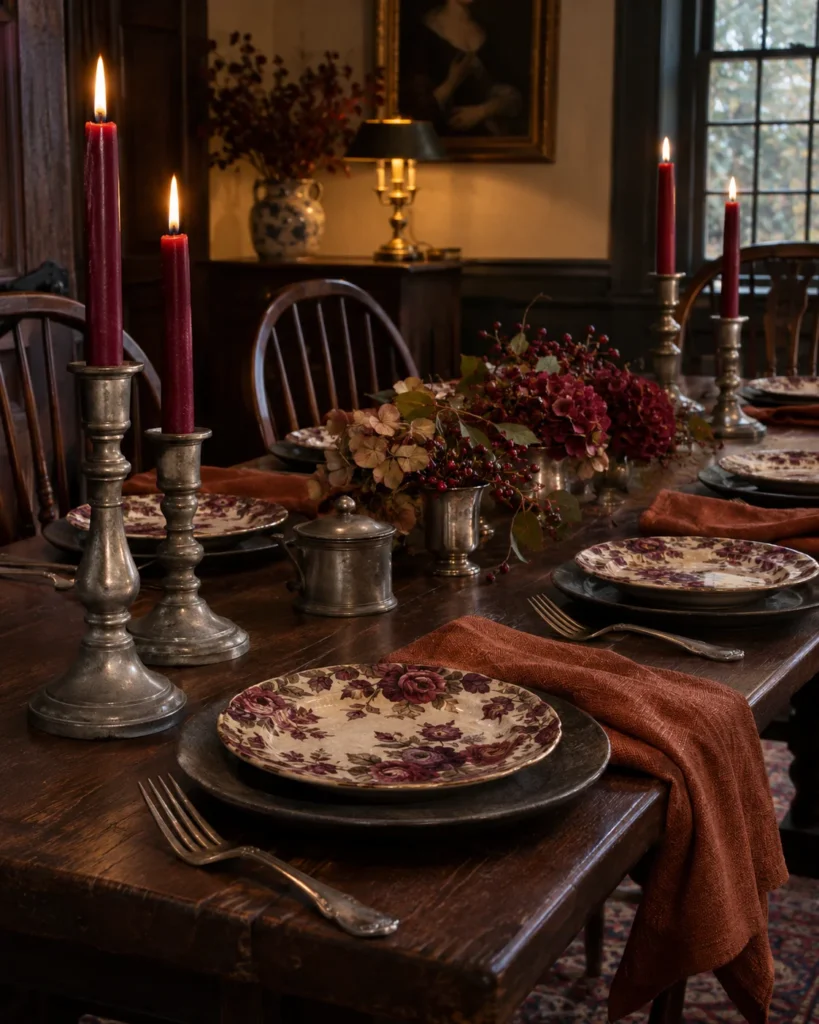
Era · Colonial revival
The Look and Era Aesthetic: Dull grey pewter catching low candlelight beside tea plates printed with dark roses and plums. It’s moody and historic, the kind of table that begs for a long, slow dinner.
Table Elements to Hunt For:
- Pewter candlesticks in mixed heights
- Dark floral tea or salad plates
- Plain dark wood or pewter chargers
- Deep burgundy taper candles
The Layering Technique:
- Use plain plates as the base so the dark florals on top stand out.
- Cluster pewter candlesticks at both ends instead of a center row.
- Keep linens dark, like rust or charcoal, for the moodier feel.
Thrifting and Practical Tip: Search “pewter candlestick” or “dark floral chintz plate.” Older pewter can contain lead, so use it for candles and decor only, never for food. The dim light here works best with lamps on, which I cover in my warm cozy home lighting ideas.
A reader once placed her late mother’s ironstone turkey platter, full of a 20 pound bird, at the very end of a drop-leaf table. Halfway through carving, the leaf dipped. Everyone lunged, the platter was saved, and the gravy was not.
The fix: Heavy vintage serving pieces go dead center, over the table base, never on a leaf or the edge.
9. French Brocante Wire Egg Baskets With Mini White Gourds
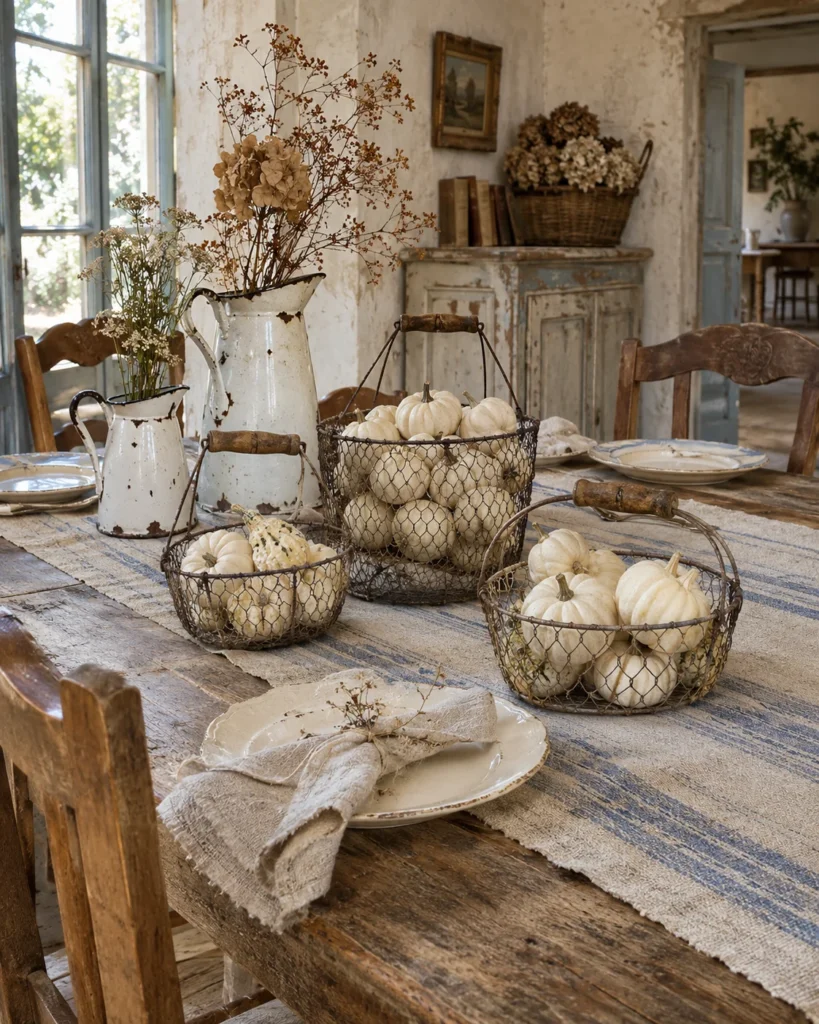
Era · Early 1900s France
The Look and Era Aesthetic: Rusty wire egg baskets filled with tiny white gourds, placed on a table with chipped enamel and worn grain sacks. It’s relaxed and charmingly imperfect, very French countryside.
Table Elements to Hunt For:
- Vintage wire egg baskets
- Mini white gourds or Baby Boo pumpkins
- A striped grain sack or ticking runner
- White enamelware pitchers or cups
The Layering Technique:
- Lay the grain sack runner down the center.
- Set two or three baskets along it, each filled with gourds.
- Add enamel cups of dried flowers in between.
Thrifting and Practical Tip: Search “French wire basket,” “grain sack runner” or “vintage enamelware.” Line rusty baskets with a napkin so they don’t mark your table. These baskets live happily on a mantel after dinner too, like the setups in my Thanksgiving mantel decor ideas.
10. Cranberry Glass Tumblers on Warm Honey Wood
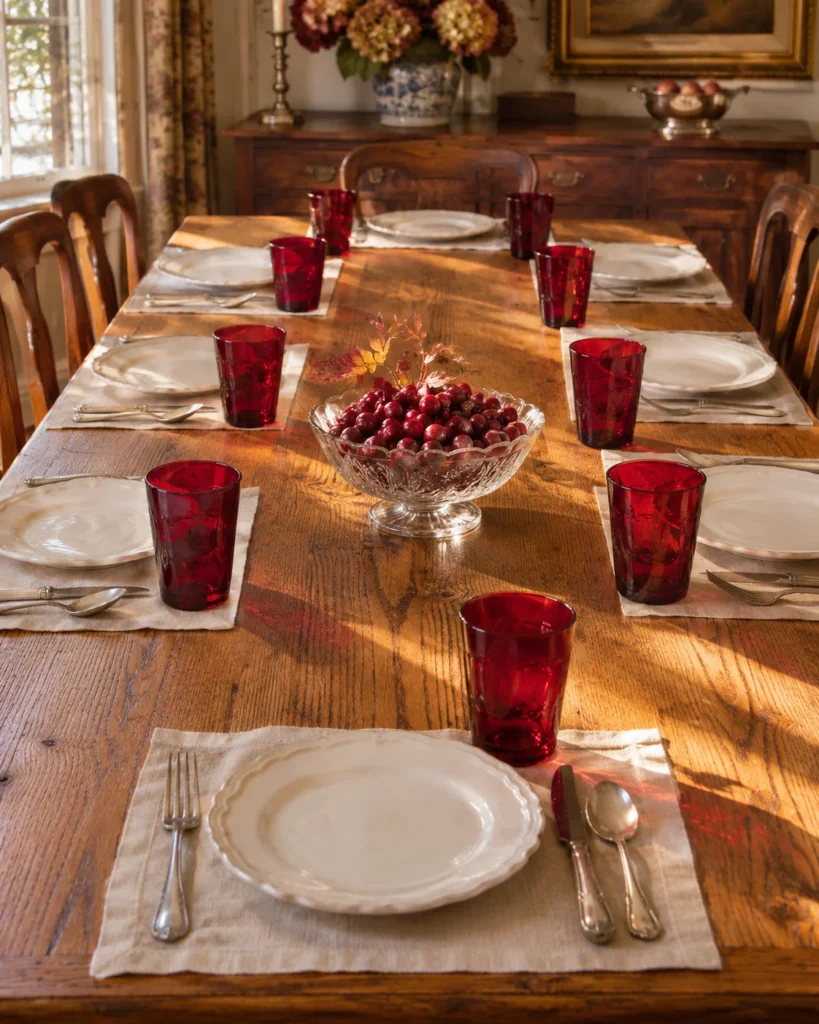
Era · Victorian to 1950s
The Look and Era Aesthetic: Deep pinkish-red cranberry glass glowing against a bare oak or maple table. With no tablecloth hiding the grain, the glass looks like jewels.
Table Elements to Hunt For:
- Cranberry glass tumblers or small goblets
- Linen placemats in cream
- A bowl of fresh cranberries at center
- Simple white plates
The Layering Technique:
- Skip the tablecloth and use placemats only.
- Set one cranberry glass at each place, just above the knife.
- Put a low glass bowl of cranberries at center to echo the color.
Thrifting and Practical Tip: Search “cranberry glass tumbler” or “ruby flash glass.” True cranberry glass is colored all the way through, while ruby flash is a coating that can scratch, so hand wash gently. Wax the wood table a day ahead to protect it from water rings.
11. Repurposed Brass Trivets as Hot Dish Riser Stations
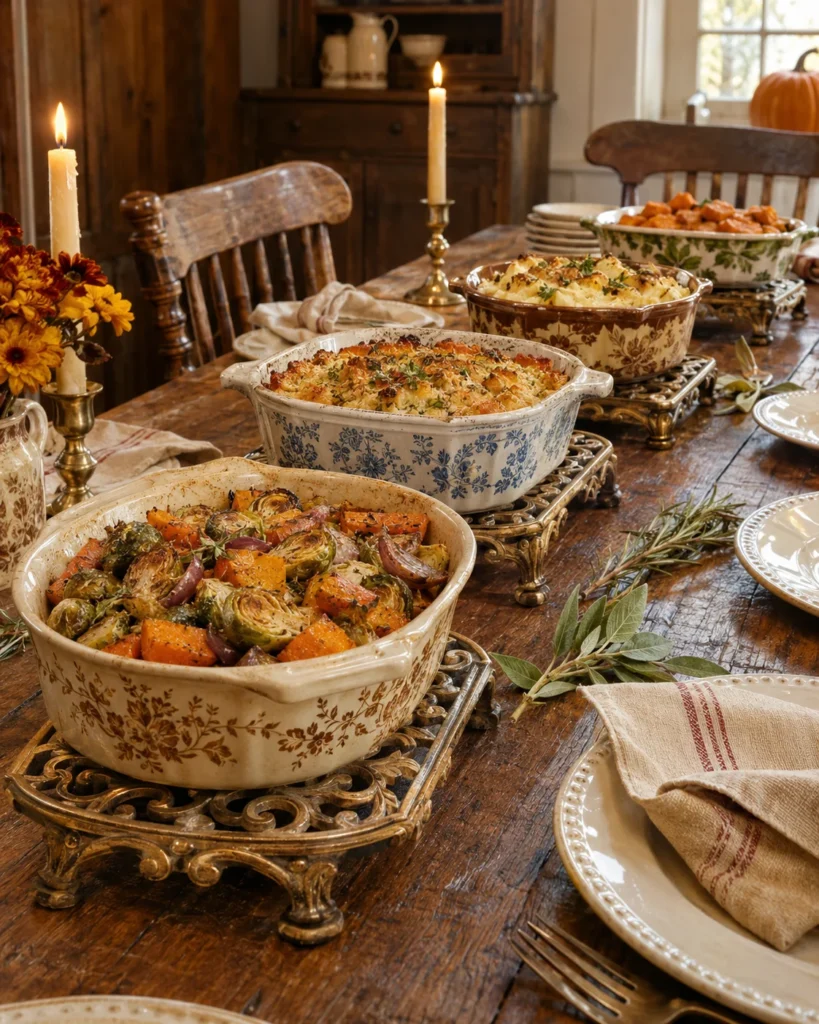
Era · 1900s to 1950s
The Look and Era Aesthetic: Ornate brass trivets with scrolls and little feet, scattered down the table and ready for hot casseroles. They look decorative until dinner arrives, then they get to work.
Table Elements to Hunt For:
- 4 to 6 footed brass or cast iron trivets
- Felt pads for the feet
- Sprigs of greenery to tuck around them
The Layering Technique:
- Count your hot dishes and set one trivet for each.
- Space them every 18 to 24 inches down the center.
- Lay a little greenery between them so the line looks finished before food arrives.
Thrifting and Practical Tip: Search “brass footed trivet” or “cast iron trivet.” Stick felt pads on the feet so metal never scratches wood. Brass trivets heat up under hot pans, so warn guests not to grab them.
12. Floral Chintz Salad Plates on Simple Cream Pottery
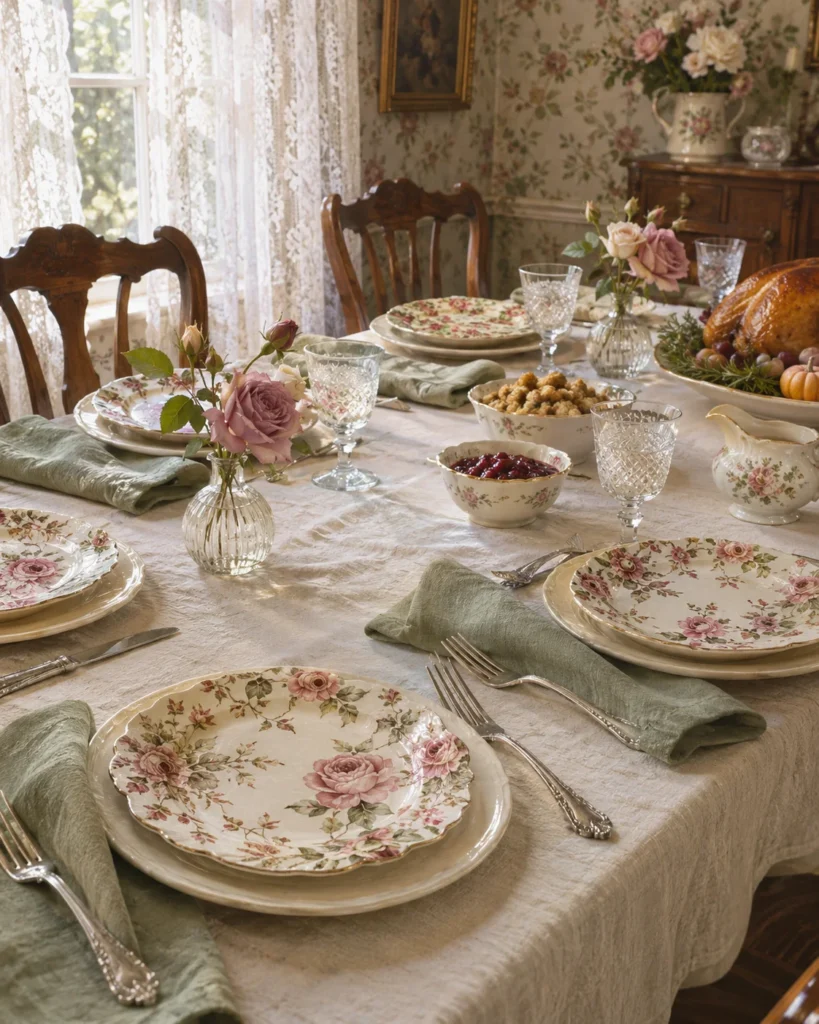
Era · 1930s to 1960s
The Look and Era Aesthetic: Busy, pretty chintz salad plates layered on plain cream stoneware. The calm base lets each floral pattern shine without fighting its neighbor.
Table Elements to Hunt For:
- Mismatched chintz or floral salad plates
- Plain cream stoneware dinner plates
- Soft linen napkins in one solid color
- Small bud vases with a single bloom
The Layering Technique:
- Set the cream plate first as a quiet base.
- Place the chintz plate on top, turned slightly off-center for a casual look.
- Use one solid napkin color for every place to tie the patterns together.
Thrifting and Practical Tip: Search “chintz salad plate,” “Royal Winton chintz” or “floral bone china salad plate.” Pick plates that share at least one color, like rose or green, so the mismatch feels planned. Bring the same soft florals into your living room with the textiles from my cozy Thanksgiving living room ideas.
3 Essential Rules for Dining With Antique Ware
- Think about food safety first. Some older ceramic glazes, pewter and crystal can contain lead. If you don’t know a piece’s history, test it with an at-home lead test kit, or use it for bread, whole fruit or dry decor rather than hot or acidic food like cranberry sauce. Crazed glazes with fine cracks can also trap bacteria, so keep those for display.
- Skip the dishwasher, every time. Gold and silver gilt rims fade, pressed glass clouds and old seams crack under hot water and strong detergent. Hand wash in lukewarm water with mild soap, use a rubber mat in the sink and dry right away.
- Watch your weight distribution. Ironstone tureens and cast iron are heavier than they look once they’re full. Keep the heaviest pieces in the center, over the table base, and never on a drop leaf or extension. The same balance logic applies to the cozy setups in my fall living room decor ideas, where heavy pieces anchor low and light pieces layer on top.
Frequently Asked Questions
How do you mix and match different vintage china patterns without it looking messy?
Choose one shared color, like brown transferware or rose florals, and let the patterns vary. Ground everything with plain plates or solid linens so the mix looks intentional.
Can you safely put hot Thanksgiving food on vintage ironstone platters?
Sturdy ironstone without cracks or crazing usually handles warm food, but warm the platter gradually with hot tap water first to avoid thermal shock. Never put it in the oven or under a broiler, and skip pieces with visible cracks.
Where are the best places to find inexpensive vintage Thanksgiving table decor?
Estate sales on their last day, church rummage sales and local thrift stores are the best bets. Online marketplaces and auction sites also work well for single plates and mixed lots.
The most beautiful vintage Thanksgiving tablescapes aren’t the ones that look like a showroom. They’re the ones with a chipped gravy boat that belonged to someone you love and a silver spoon that’s been passed down for generations. Pull out the heirlooms, mix in a few thrifted finds and let the table tell your family’s story. Then pin your favorite layout to Pinterest so it’s ready for next year.