Vintage Christmas Decorations From the 1950s and How to Spot the Real Originals
Scroll through holiday decor today and it’s all oatmeal linen, dried eucalyptus and a lot of beige. Lovely, but quiet. Vintage christmas decorations 1950s style were the exact opposite. Silver trees that spun under a rainbow of light. Candy-pink ornaments. Winking ceramic Santas. Nobody was going for subtle. The whole decade was cheerful, a little silly and wildly optimistic about the future.
If you grew up around this stuff, or with grandparents who never threw any of it away, you probably remember it with your whole body. The soft hum of the color wheel in the dark. Bubble lights slowly starting to bubble once they warmed up. The cool, thin feel of a striped Shiny Brite in your palm, so light you were scared to hold it.
But collecting it today comes with two real headaches. First, how do you display mid-century pieces without your living room looking like a crowded thrift shop booth? And second, how do you know if that “1950s” ornament is actually from the fifties, or a reproduction made last year?
Below are 18 vintage christmas decorations 1950s families actually hung, with a bit of history for each, how to style them today without the clutter, and the clues I look for at estate sales to tell the real thing from a copy.
The Collector’s Field Guide: 3 Rules for Spotting Authentic 1950s Holiday Decor
Before you pay estate sale prices, run every piece through these three checks. They’ll catch most reproductions.
1. Check the Caps and Markings
Original Shiny Brite ornaments usually have metal caps stamped “Shiny-Brite Made in U.S.A.” Japanese pieces from roughly 1945 to 1952 may carry a “Made in Occupied Japan” stamp or paper label, which dates them right away.
2. Look for Honest Age
Real old mercury glass shows soft dark spots and cloudy patches where the silvering inside has aged. Paint often has tiny flakes and rubbed areas. Reproductions tend to look too perfect and too evenly bright.
3. Feel the Material
Hard celluloid, heavy chalkware, porcelain with textured “spaghetti” trim and real spun glass all feel different from modern lightweight plastic. If it feels hollow and featherlight where it shouldn’t, be suspicious.
18 Iconic Vintage Christmas Decorations 1950s Homes Loved
Space-Age Trees, Metallics and Atomic Glass
The Space Race was on, and Christmas decor followed. Shiny, silver and futuristic.
1. Shiny Brite Stenciled and Reflector Ornaments
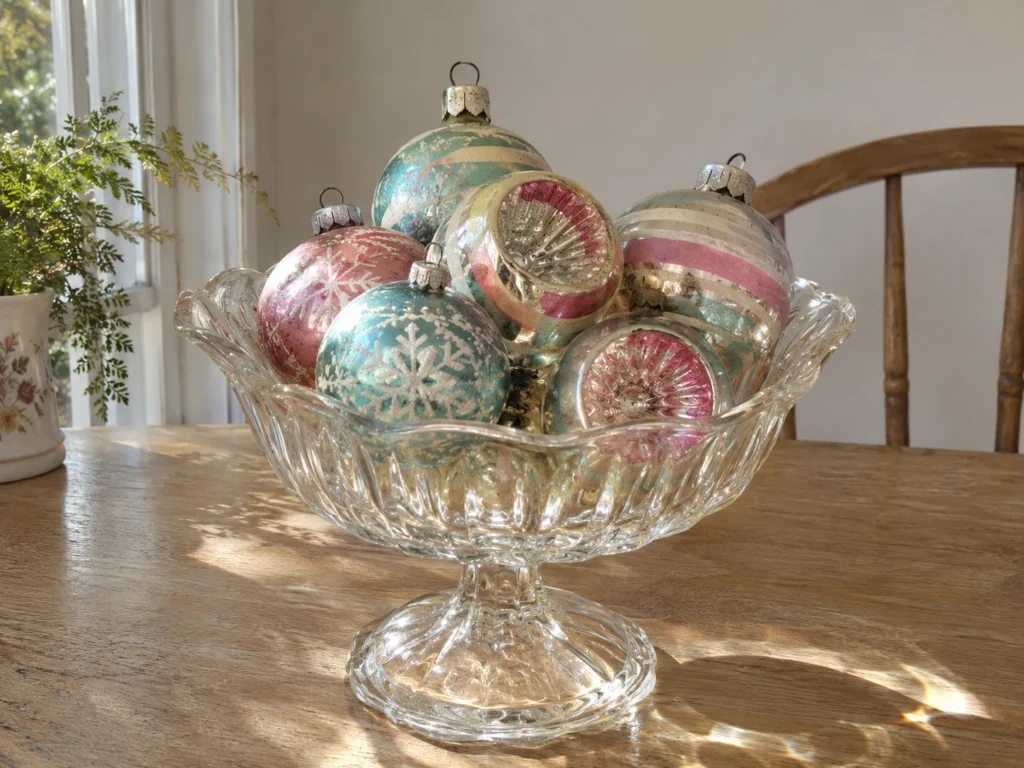
Feels like · grandma’s tree on Christmas Eve
History: Shiny Brite started in the late 1930s, and by the 1950s it was the ornament brand in American homes. Look for hand-painted stripes, stenciled stars and frosted bands. Reflector or “indent” styles have a dimpled side that bounces light back.
Why It Stays Iconic: The colors are pure fifties. Pink, aqua, silver and red, all glowing under warm tree lights.
Styling Tip: Don’t scatter them across the whole tree. Pile a dozen in one footed glass bowl or apothecary jar for an easy display that keeps them safe.
2. The Evergleam Aluminum Christmas Tree
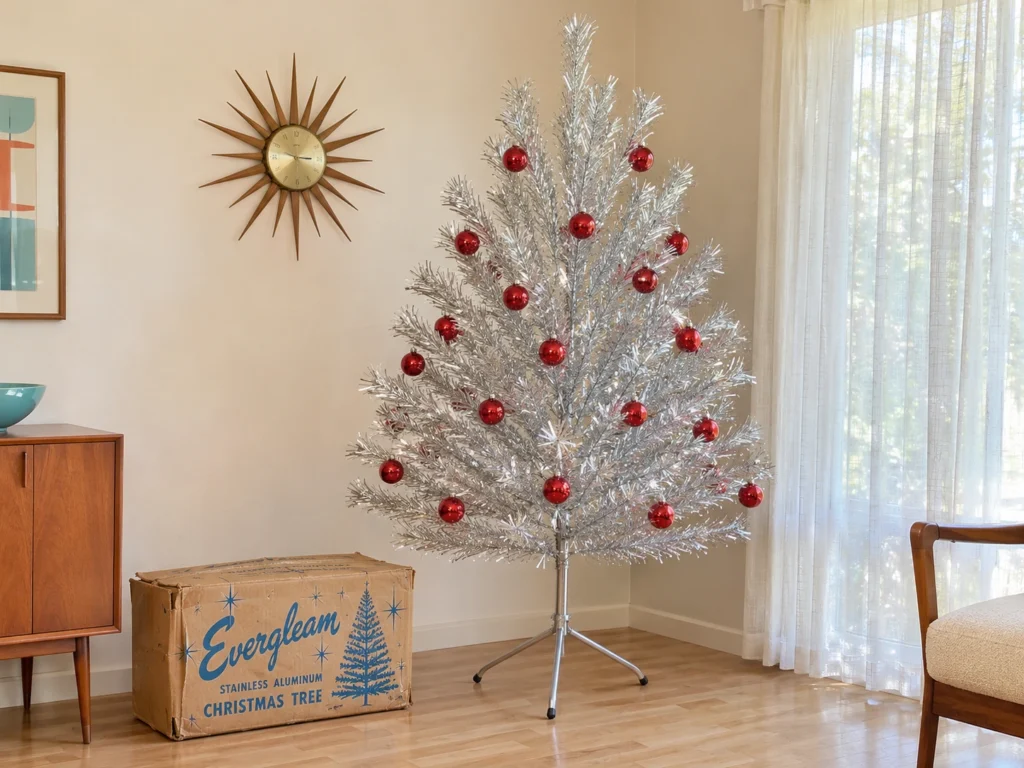
Feels like · Christmas on a 1959 space station
History: Evergleam aluminum trees came out of Manitowoc, Wisconsin, at the very end of the decade and took off into the 1960s. Unboxing one still gives off a faint metallic smell, and each branch slides out of its own paper sleeve.
Why It Stays Iconic: It was the ultimate modern status symbol. No needles, no watering, just pure shimmering silver.
Styling Tip: Decorate it with just one color of ornament, like all red or all blue, and keep the original box. A tree in its original box and sleeves is worth noticeably more.
3. Motorized Revolving Color Wheels
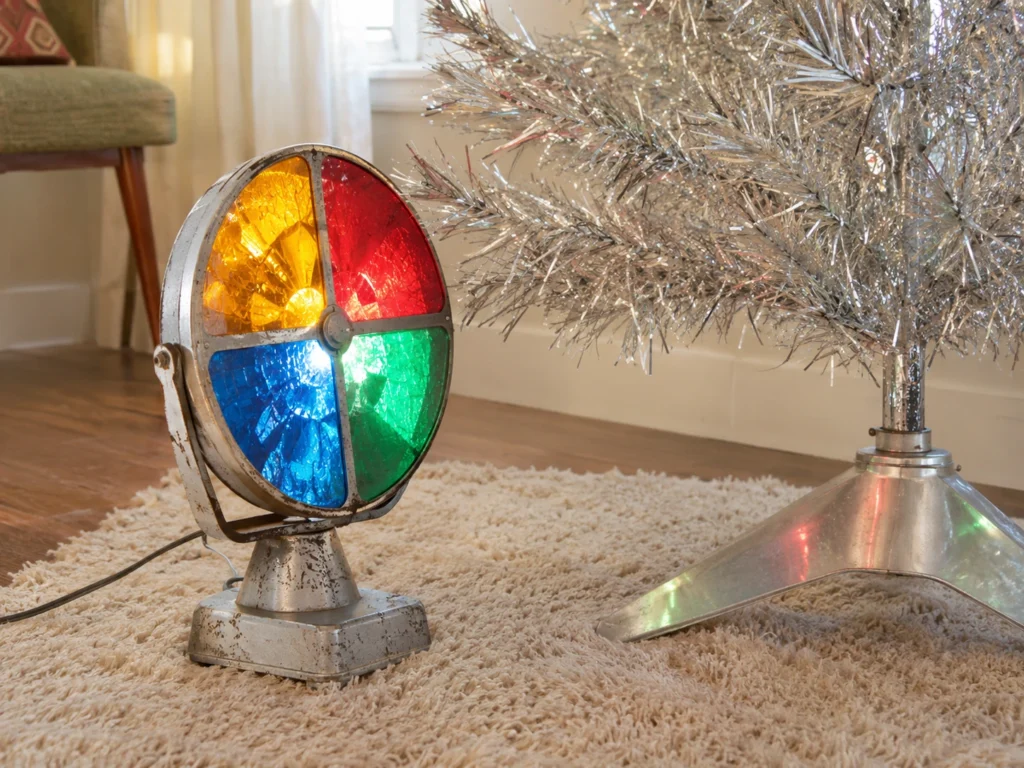
Feels like · a slow-motion disco from 1960
History: Because you can’t safely hang electric lights on an aluminum tree, families used a color wheel instead. A spotlight shines through a turning disc of red, blue, green and amber panels, washing the tree in changing color.
Why It Stays Iconic: That gentle hum and slow shift of color is pure nostalgia. Kids would lie under the tree and watch it for ages.
Styling Tip: Old color wheels run hot and have aging cords. Have one checked by someone who repairs vintage electrics, keep it on the floor a few feet from the tree, and never leave it running unattended.
4. Multi-Tiered Glass Finial Tree Toppers
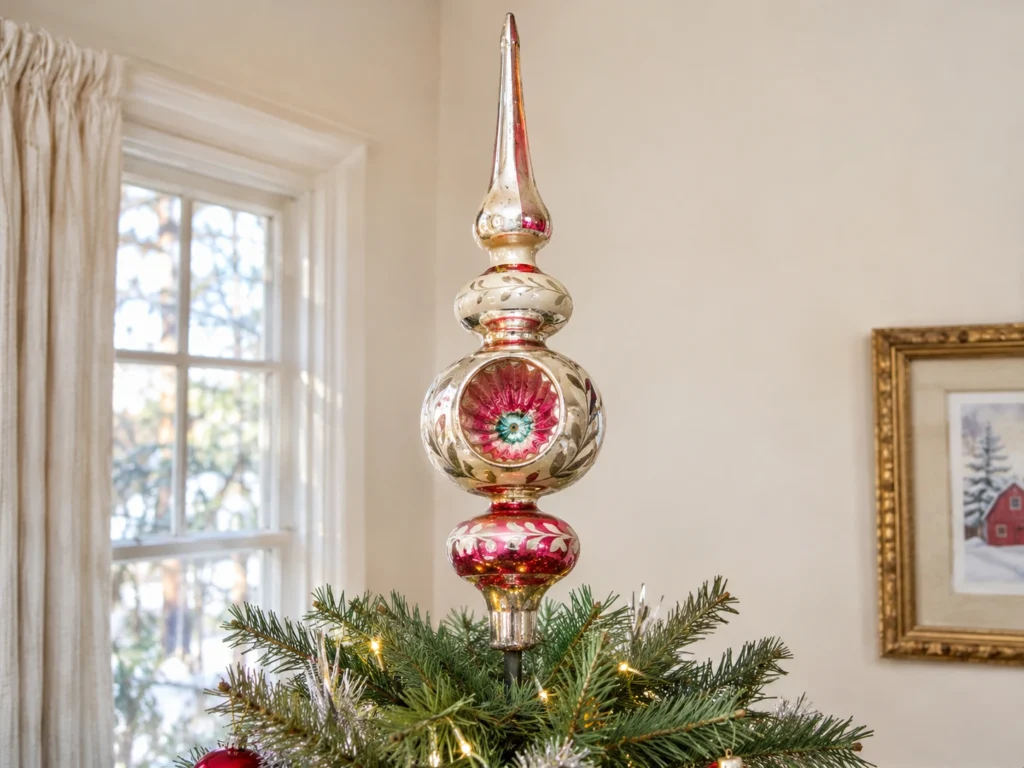
Feels like · a rocket ready to launch
History: Tall, pointed glass toppers with stacked bulbs and indents looked a lot like rockets and satellites, which made perfect sense in the space-obsessed fifties.
Why It Stays Iconic: They give a tree a sleek, vertical finish that’s very different from a star or angel.
Styling Tip: Toppers are thin and fragile at the neck. Slide a short wooden dowel up into the base before putting it on the tree, so it doesn’t snap if the tree is bumped.
5. Blown Mercury Glass Bead Garlands
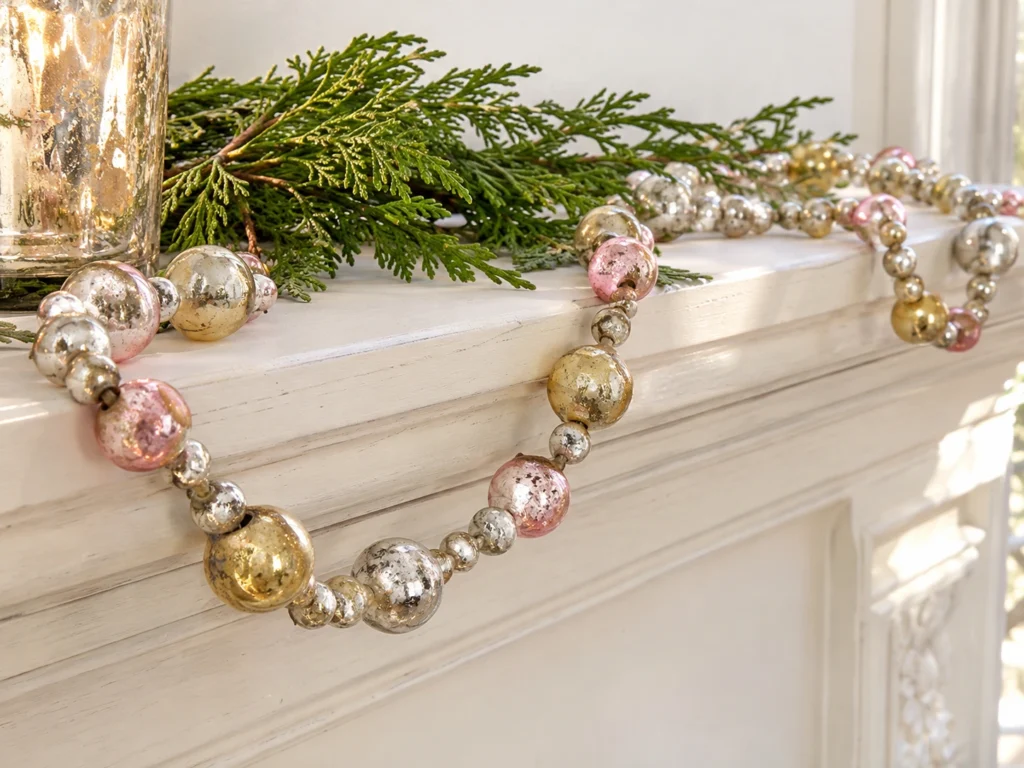
Feels like · a string of tiny frozen bubbles
History: These delicate garlands were made from little blown glass beads strung together, often in silver, gold or soft pastels. Old ones crinkle softly when you move them.
Why It Stays Iconic: They catch the light from every angle and drape beautifully across evergreen branches.
Styling Tip: The original string is often brittle. Drape them across a mantel or around a cake stand instead of pulling them through a tree. For layouts that suit fragile pieces, these Christmas mantel decorating ideas help.
The Box of “Vintage” Ornaments
At an estate sale once, I watched a woman pick up a beautiful box of “1950s” ornaments, perfectly bright and every one flawless. She was about to pay a collector price. I asked her to flip one cap over. No stamp, no rust, glue that was still clear and fresh. They were modern reproductions in an old box. A week later she found a real set at a church sale for a few dollars, scuffed and wonderful. Old things should look like they’ve lived a little.
Kitschy Figurines and Quirky Characters
The fifties loved a cheeky character, and these pieces have a sense of humor you don’t see much anymore.
6. Holt-Howard Winking Santa Ceramics
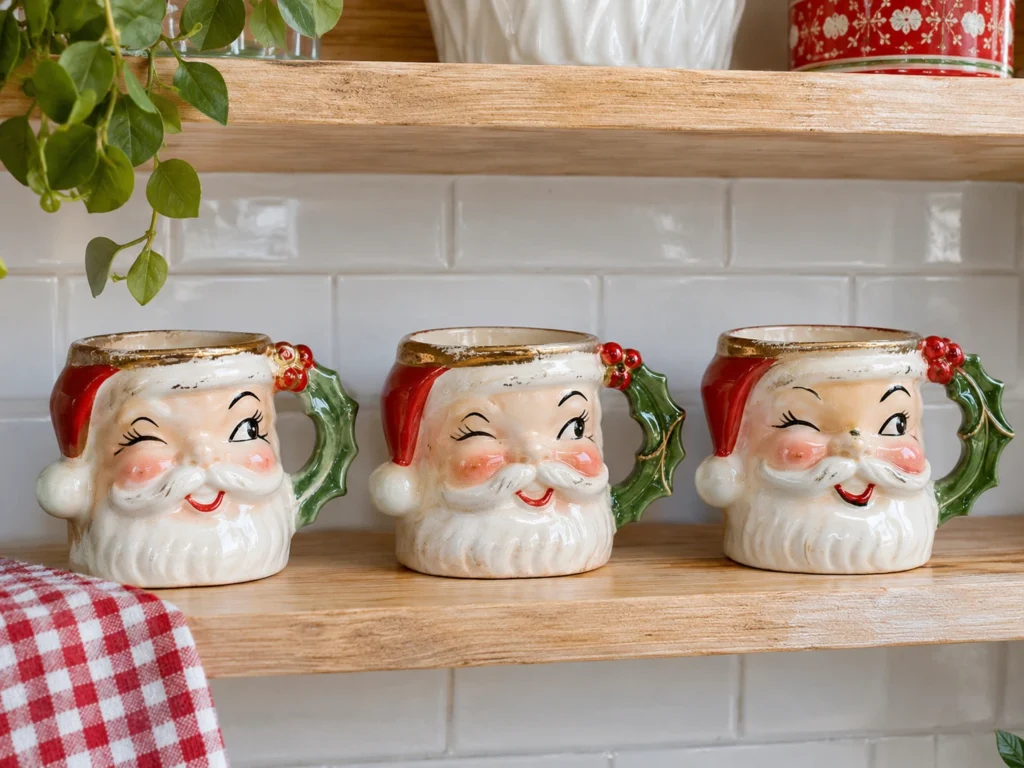
Feels like · a Christmas party with a jolly uncle
History: Holt-Howard, founded in the late 1940s, made playful ceramic Santa mugs, pitchers and salt and pepper shakers, many with winking eyes and gold trim. Look for an ink stamp or foil sticker on the bottom, sometimes with a date.
Why It Stays Iconic: They’re funny, a little mischievous and instantly recognizable to collectors.
Styling Tip: Line three or four Santa mugs on an open kitchen shelf. Older gold trim and glazes may not be food safe, so use them for display, not hot cocoa.
7. Poseable Knee-Hugger Pixie Elves
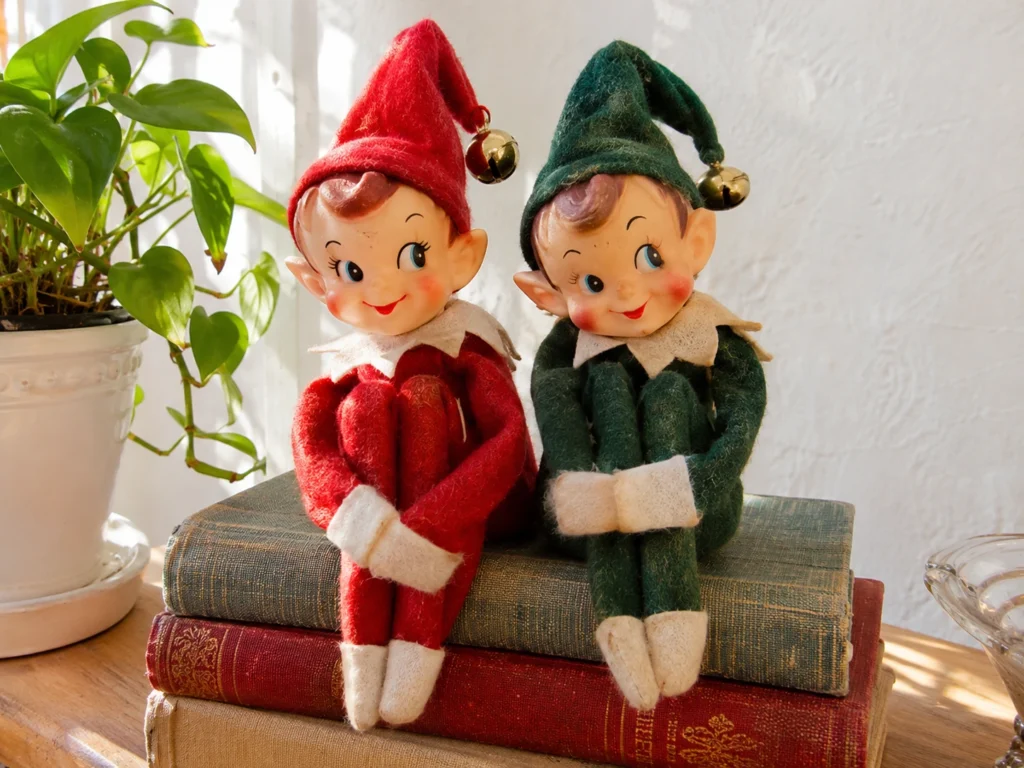
Feels like · a mischievous elf watching from the shelf
History: These little felt elves with wire limbs and painted faces, often marked Japan, sat with their arms wrapped around their knees. They’re the spiritual ancestors of today’s Elf on the Shelf.
Why It Stays Iconic: Their cheeky faces and bendy limbs mean you can perch them anywhere.
Styling Tip: Tuck them into odd spots, like hanging off a picture frame, sitting on a stack of books or peeking out of a plant. Old felt is fragile, so handle them gently.
8. Lefton Spaghetti-Trim Angels and Reindeer
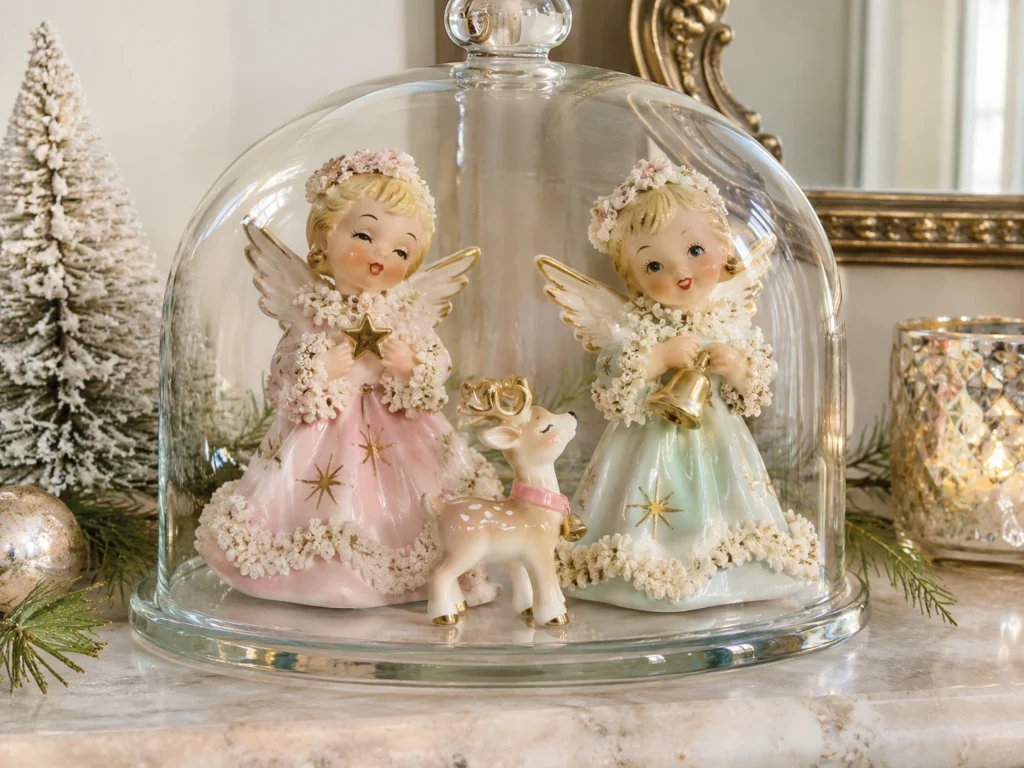
Feels like · lace frosting on a holiday cake
History: Lefton imported Japanese porcelain figurines, and their Christmas pieces often had “spaghetti” trim, tiny strands of porcelain that look like fuzzy fur or lace. Look for foil labels or stamped marks on the base.
Why It Stays Iconic: The detail is incredible for mass-produced decor, and pastel angels are a classic collector favorite.
Styling Tip: Spaghetti trim breaks if you look at it wrong. Display them under a glass cloche, which also keeps dust out of all those tiny crevices.
9. Illuminated Tabletop Blow Molds
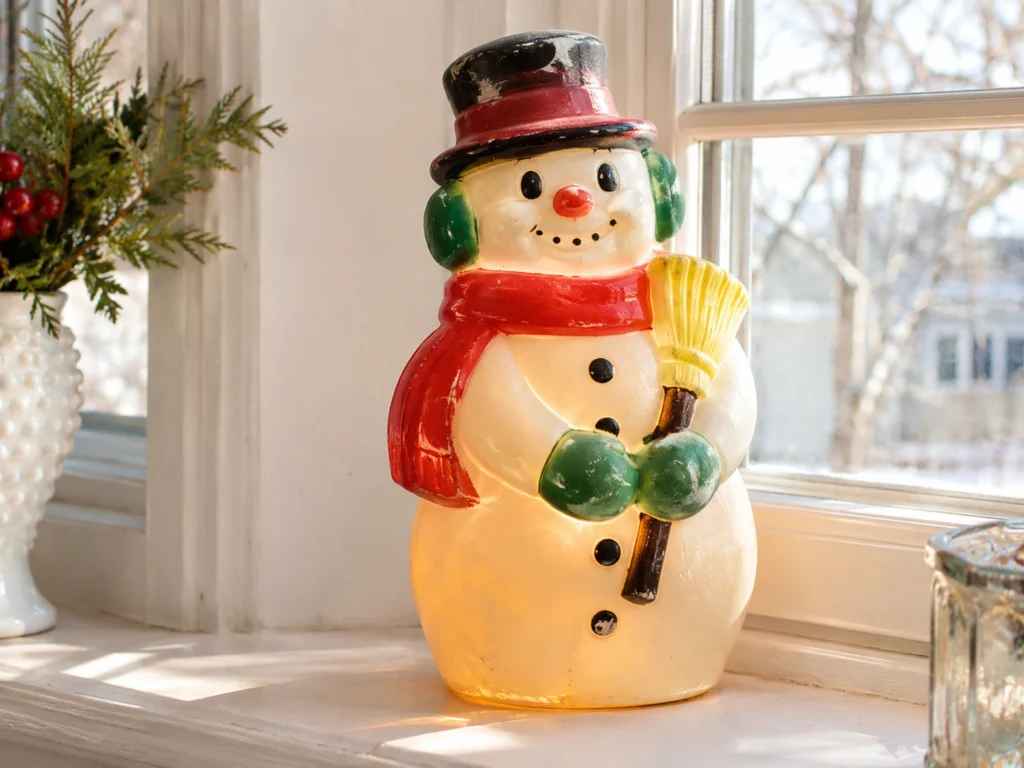
Feels like · a glowing Santa in grandpa’s front window
History: Hollow plastic Santas, snowmen and choir kids lit from inside by a single bulb. Small tabletop versions began showing up in the 1950s, and the big yard versions became hugely popular a little later.
Why It Stays Iconic: That soft, peachy glow through painted plastic is pure mid-century Christmas.
Styling Tip: Swap the old bulb for a cool-running LED bulb so the plastic doesn’t warp or discolor, and replace any cracked cords.
10. Molded Celluloid Reindeer With Jingle Bell Collars
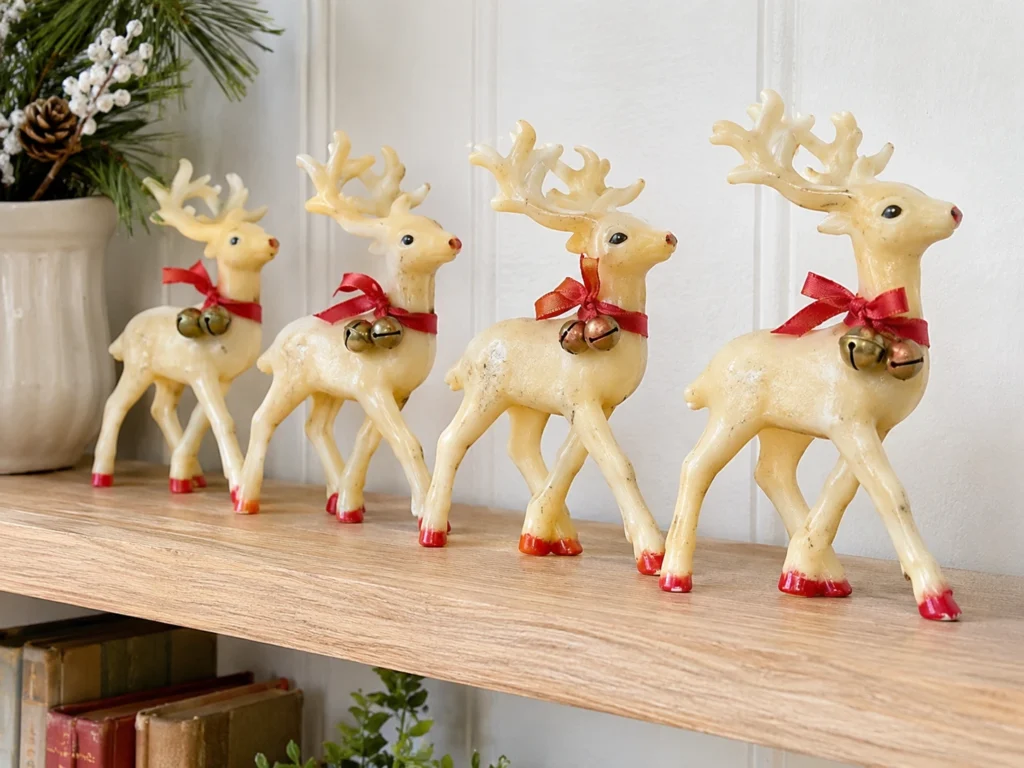
Feels like · a tiny sleigh team from a toy shop
History: Thin, light celluloid reindeer, often white or pale with painted details and a little bell on a ribbon, were common tree and tabletop decorations.
Why It Stays Iconic: They’re sweet, cheap to collect, and look adorable lined up in a row.
Styling Tip: Celluloid is highly flammable. Keep these well away from bulbs, candles, fireplaces and anything warm. A bookshelf or glass cabinet is the safest home for them.
Whimsical Illumination and Nostalgic Textures
These are the pieces with the most magic, and the ones that need the most care.
11. NOMA Bubble Lights
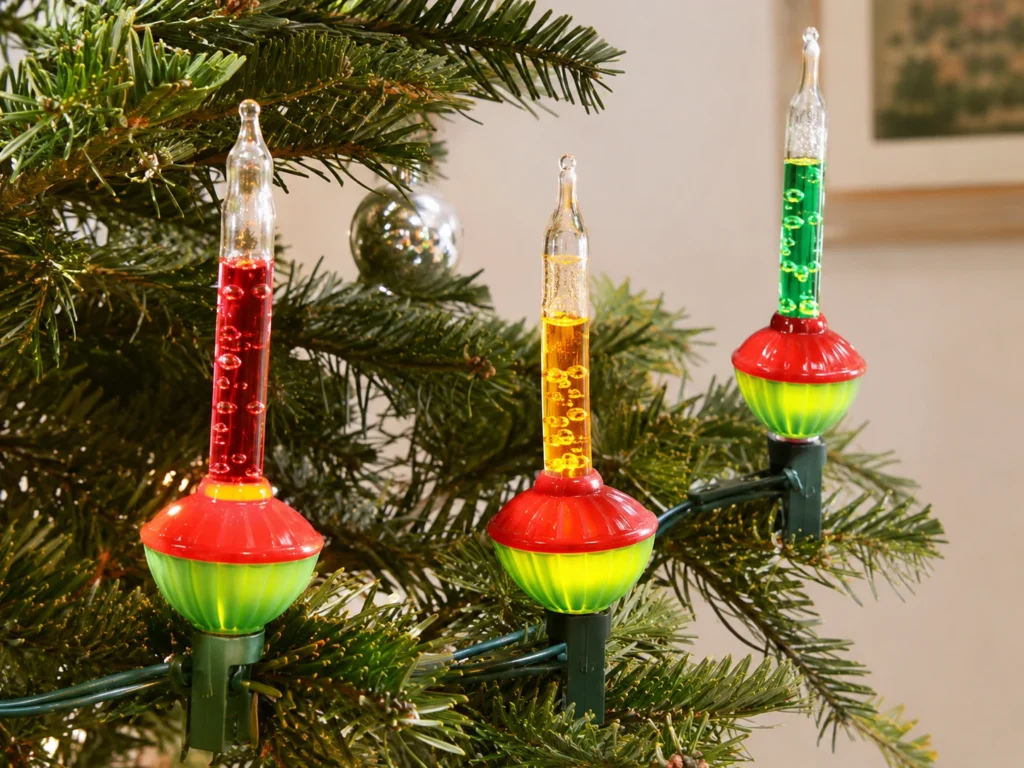
Feels like · watching a lava lamp in miniature
History: NOMA launched bubble lights in the 1940s, and they exploded in popularity through the fifties. Each glass tube holds a liquid, often methylene chloride, that bubbles once the bulb warms it.
Why It Stays Iconic: The slow bubbling is hypnotic. Kids would wait and wait for the first one to start.
Styling Tip: Display original bubble lights unplugged, or have the wiring checked first. If a tube is cracked or leaking, retire it, since the liquid is toxic. Modern reproduction bubble lights give the same look safely.
12. Heavy Lead Foil Tinsel Icicles
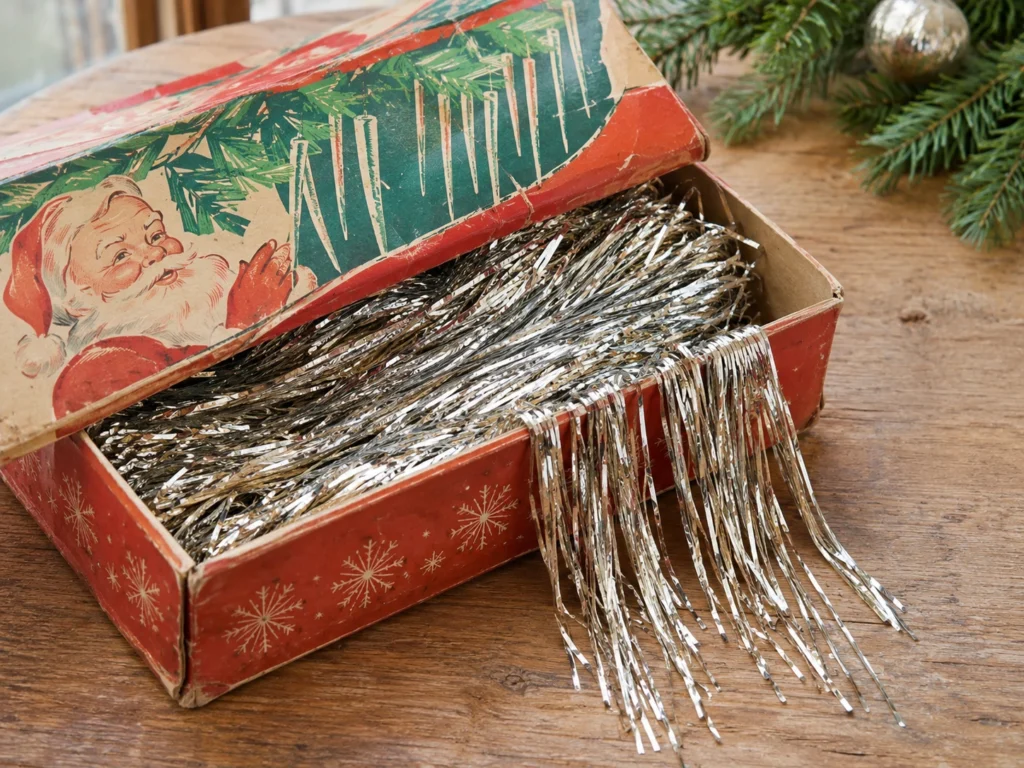
Feels like · silver rain frozen on the branches
History: Mid-century tinsel was often made from lead foil. It was heavy, so it hung straight down like real icicles instead of floating around like modern mylar. Production stopped in the early 1970s over lead concerns.
Why It Stays Iconic: Nothing else drapes quite like it. Collectors treasure the original boxes.
Styling Tip: Since it contains lead, keep vintage tinsel away from kids and pets, wear gloves to handle it, and wash your hands after. For your tree, choose modern heavy-weight tinsel instead, and keep the original as a boxed display piece.
13. Spun Glass Angel Hair
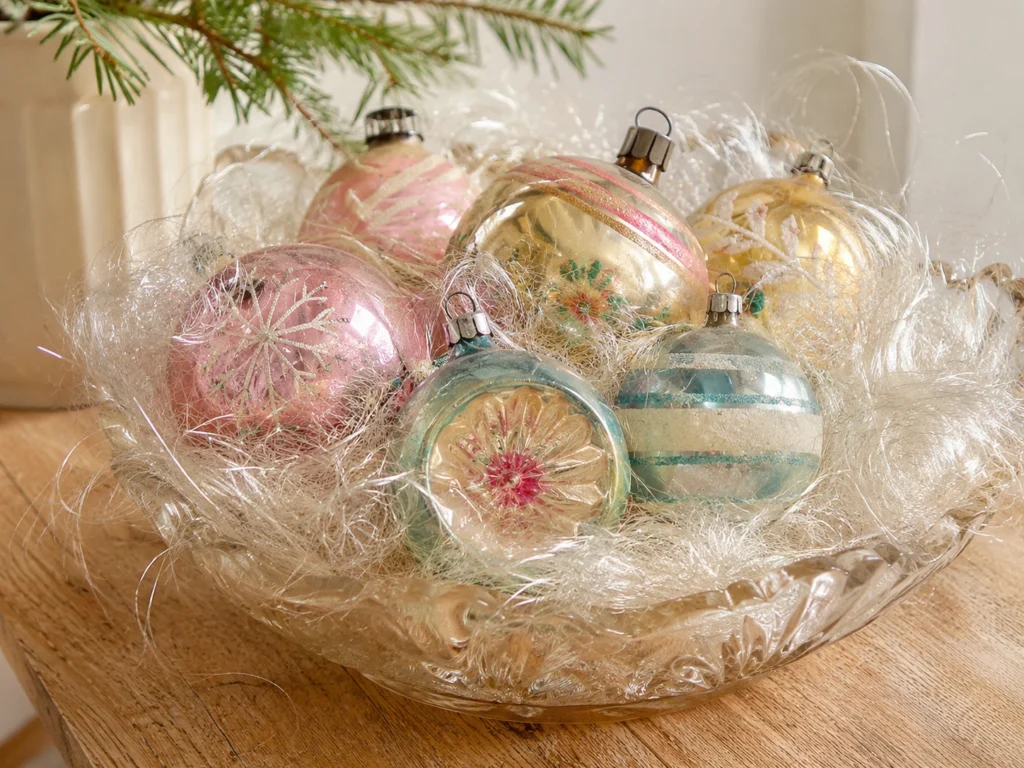
Feels like · a soft cloud wrapped around the lights
History: Angel hair was fine spun glass fiber stretched over branches to create a misty, cloud-like glow around the lights and ornaments.
Why It Stays Iconic: It turned tree lights into soft halos, a look that’s hard to recreate any other way.
Styling Tip: Real angel hair is glass fiber. It irritates skin and eyes and can cut fingers. Wear gloves and eye protection if you ever unpack it, and keep it far from kids and pets. Modern polyester “angel hair” gives a similar cloud safely.
14. Spun Cotton Snowmen and Mushrooms
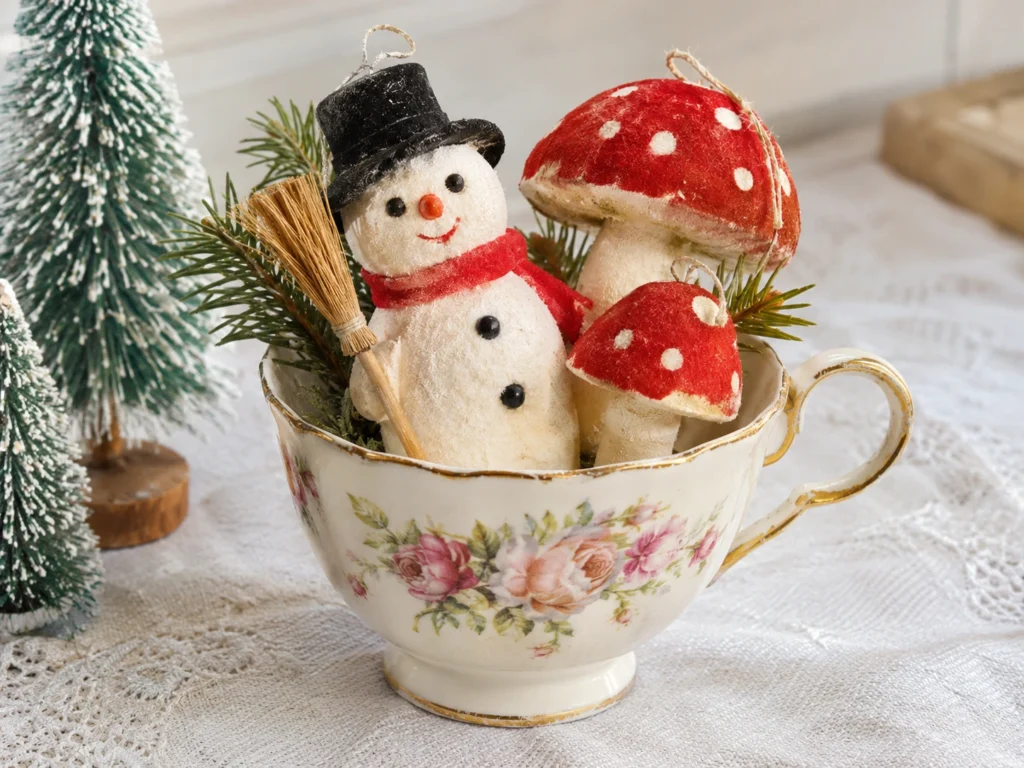
Feels like · a fairy tale forest in a teacup
History: Tiny figures made from tightly wound cotton, often from Germany or Japan, were tucked into packages, trees and little winter scenes. Red-capped mushrooms were a European good luck symbol.
Why It Stays Iconic: They’re handmade, soft and full of folk charm.
Styling Tip: Group a few in a vintage teacup or tuck them around a cake stand with some faux snow for a tiny winter scene.
Tabletop Charm, Paper and Miniatures
Affordable, colorful and easy to work into a modern home.
15. Screen-Printed Holiday Tablecloths
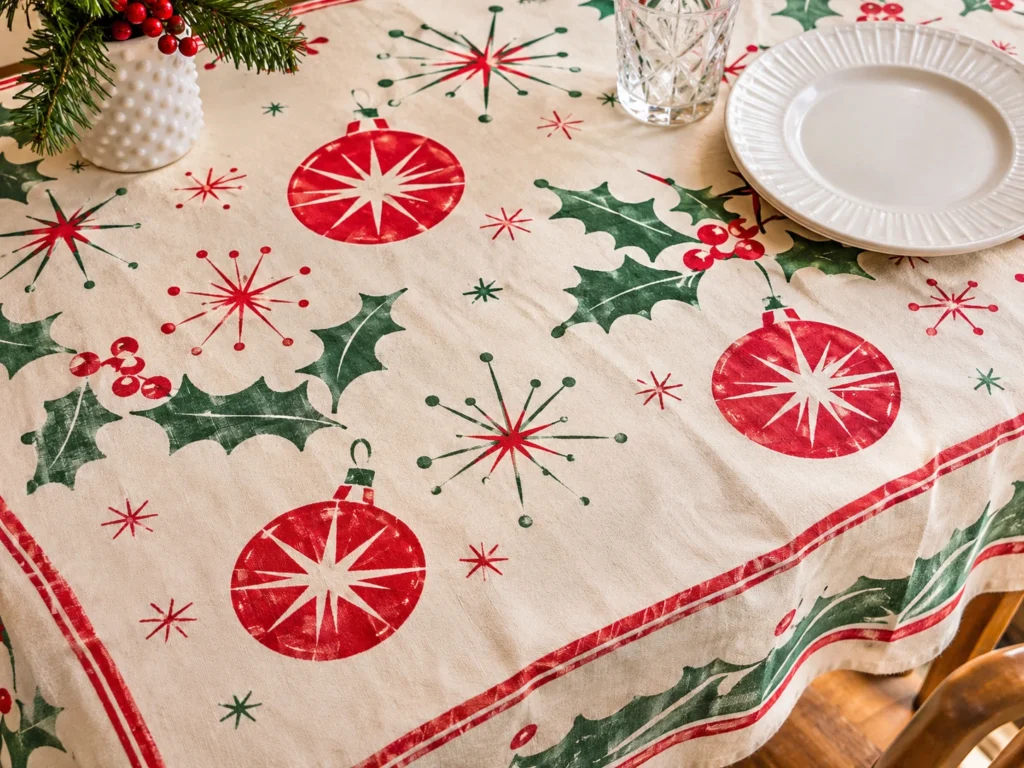
Feels like · Christmas dinner at grandma’s kitchen table
History: Cotton tablecloths printed with atomic snowflakes, holly, candles and retro ornaments in bright red, green and gold.
Why It Stays Iconic: They instantly set a cheerful, nostalgic mood without any other decor.
Styling Tip: Let the tablecloth be the star and keep everything else simple, with plain white plates and one centerpiece. These simple Christmas dinner table settings show how to keep it clean. Wash vintage linens by hand in cold water to protect the print.
16. Fold-Out Paper Honeycomb Centerpieces
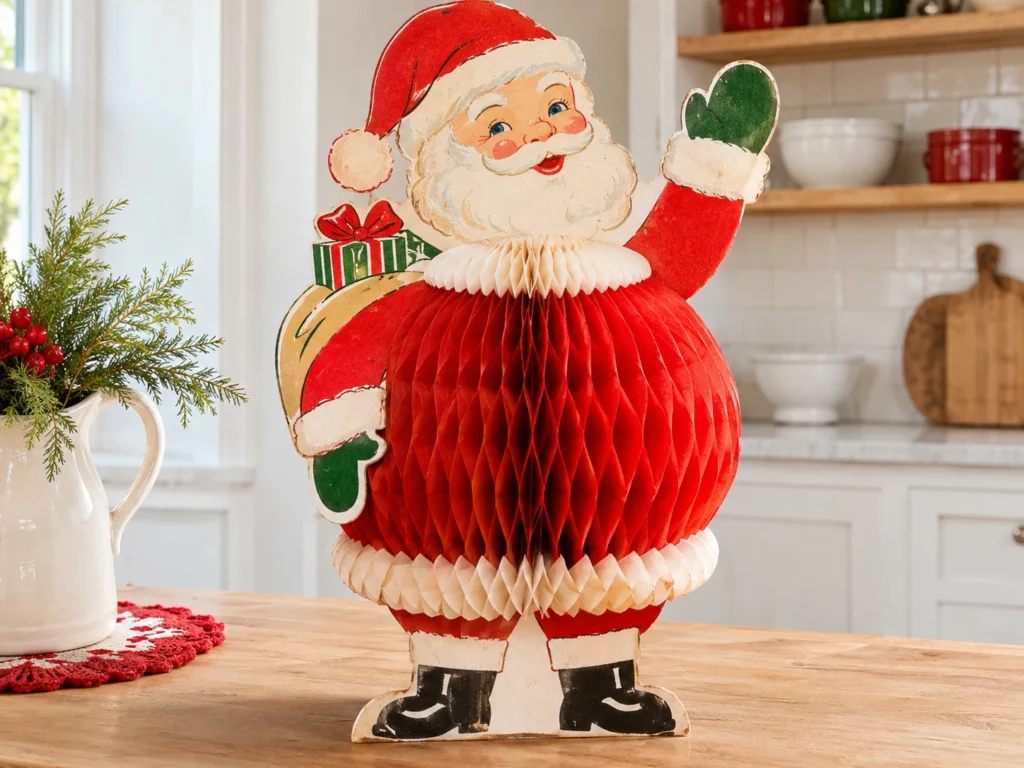
Feels like · a 1950s school Christmas party
History: Flat cardboard Santas, bells and trees that fold open into puffy tissue honeycomb shapes. Companies like Beistle made these for decades.
Why It Stays Iconic: They’re inexpensive, colorful and fold flat for storage, which made them a fixture in homes, schools and diners.
Styling Tip: Hang a few honeycomb bells from a light fixture over the table, or use one tall Santa as a centerpiece. Keep them dry, since tissue paper wilts with moisture.
17. Electric Candle Window Arches
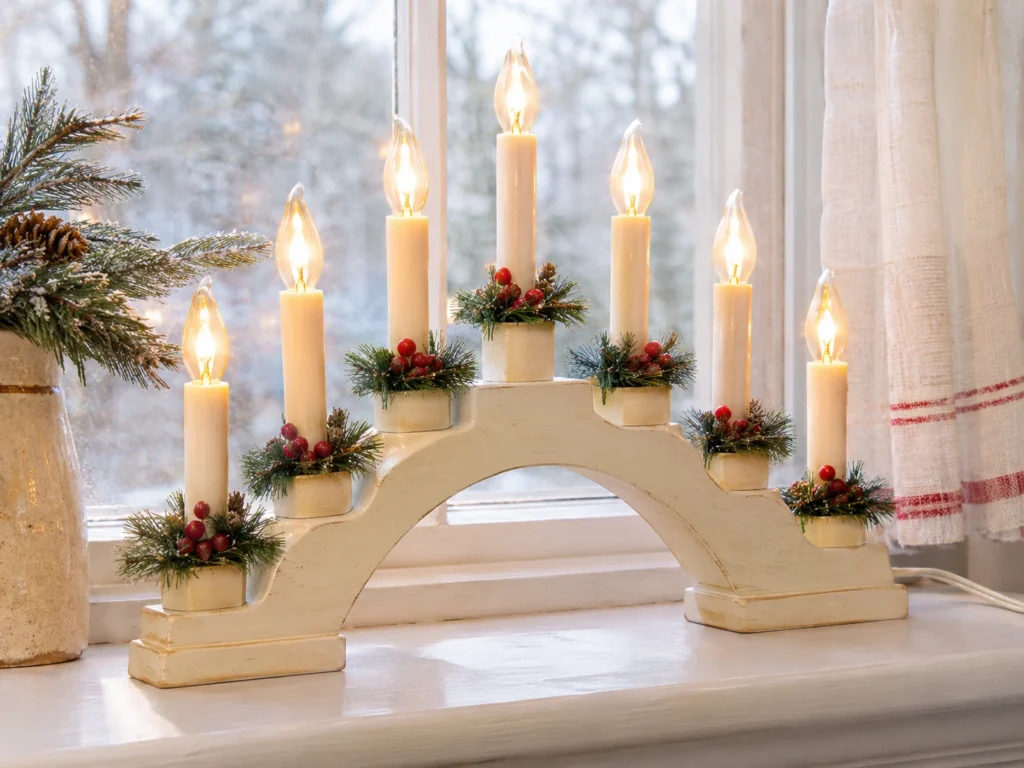
Feels like · coming home to a lit window on a snowy night
History: Stepped arches of electric candles, borrowed from a Scandinavian tradition, became a cozy window favorite in American homes in the mid-century years.
Why It Stays Iconic: One arch in each window gives the whole house a warm glow from the street.
Styling Tip: Swap old bulbs for low-heat LED candle bulbs, check the cord for cracks, and keep curtains clear of the arch.
18. Cardboard Mica-Glitter Putz Houses
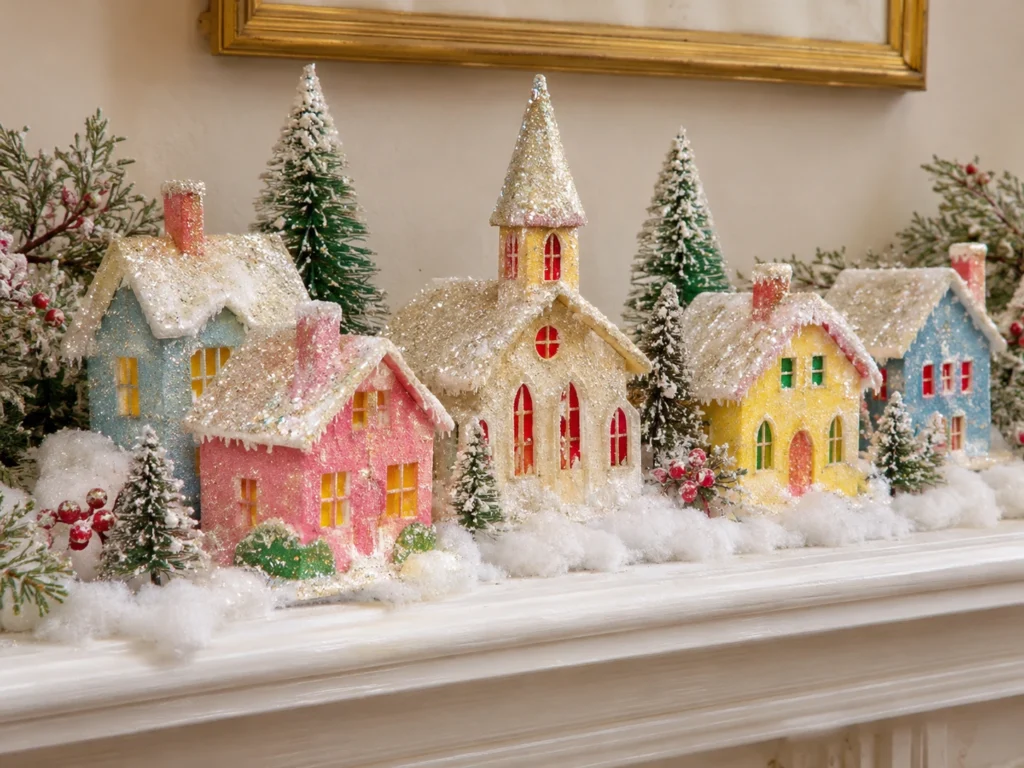
Feels like · a tiny snowy village under the tree
History: Small cardboard houses with cellophane windows and sparkly mica “snow,” many made in Japan, were set up under the tree as little villages. The word putz comes from a German and Moravian tradition of building Nativity and village scenes.
Why It Stays Iconic: They’re the roots of today’s ceramic Christmas villages, and they’re charming in a handmade way.
Styling Tip: Set up a little village on a mantel or bookshelf on a bed of cotton batting. Use battery LED tea lights only, never old bulbs inside cardboard.
The Thrift Shop Living Room
A collector friend once put out everything she owned at once. Ceramics on every table, blow molds on the floor, putz houses on the windowsills, three trees. It was a lot. Guests didn’t know where to look. The next year she picked one spot for each type, the Santas on one shelf, the village on the mantel, the Shiny Brites in one big bowl, and kept the rest of the room calm. Her collection finally looked special instead of chaotic.
Safety and Preservation: Caring for 70-Year-Old Holiday Treasures
- Old wiring is a fire risk. Original C6 and C7 light strands, bubble lights and color wheels have brittle insulation and run hot. Don’t leave them on unattended. For everyday use, choose modern LED reproduction strands with the same retro look.
- Never put electric lights on an aluminum tree. A damaged cord touching metal branches can make the whole tree live with current. Use a color wheel set on the floor nearby.
- Handle risky materials carefully. Lead tinsel, glass angel hair and leaking bubble lights need gloves and should stay away from kids and pets. Celluloid should stay away from heat.
- Store in cardboard, not sealed plastic. Wrap each piece in acid-free tissue and store it in partitioned cardboard boxes in a cool, dry closet. Sealed plastic bins trap moisture, which damages paint, paper and mercury glass silvering.
1950s Holiday Collectibles Quick Comparison Guide
Prices swing a lot depending on condition, original boxes and where you shop, so use these brackets as a rough guide. Mixing a few of these vintage christmas decorations 1950s pieces into a modern room works beautifully, as you’ll see in these Christmas living room ideas.
| Decor Item | Era Peak | Rarity and Price | Material | Fragility and Care |
|---|---|---|---|---|
| Shiny Brite Ornaments | 1940s to 1950s | Common · $ | Glass | High |
| Evergleam Aluminum Tree | 1959 to 1960s | Sought after · $$$ | Aluminum | Medium |
| NOMA Bubble Lights | Late 1940s to 1950s | Moderate · $$ | Glass, liquid, plastic | High, electrical |
| Holt-Howard Santas | 1950s to 1960s | Collectible · $$ | Ceramic | Medium |
| Knee-Hugger Elves | 1950s to 1960s | Common · $ | Felt, wire | Medium |
| Putz Houses | 1920s to 1950s | Moderate · $$ | Cardboard, mica | High |
Frequently Asked Questions About 1950s Christmas Decor
What makes a 1950s Shiny Brite different from modern reproductions?
Originals usually have metal caps stamped “Shiny-Brite Made in U.S.A.”, often with some rust. The glass is very thin, and the paint and silvering show natural wear. Reproductions tend to have bright, unmarked or newly printed caps, thicker glass and flawless, even color.
Can you put real lights on a vintage aluminum Christmas tree?
No. If a cord’s insulation is damaged, the metal branches can conduct electricity, creating a shock and fire hazard. That’s exactly why color wheels were invented. Place a rotating color wheel on the floor a few feet away and let it light the tree from outside.
How can you safely clean vintage mercury glass ornaments?
Gently. Use a soft, dry makeup brush or a soft cloth to lift dust. Never soak or wash them, since water can lift the paint and damage the silvering inside. For a stubborn spot, try a barely damp cotton swab on plain glass areas only, then dry right away.
Vintage christmas decorations 1950s style carry something you can’t buy new. Every chip and faded stripe is a Christmas morning someone already lived. You don’t need a whole house of them. One bowl of Shiny Brites, a winking Santa on the shelf and a little village on the mantel can bring all that joy into a modern home. Keep them safe, display them with a bit of breathing room, and let a few more years of memories settle on them.