15 Primitive Christmas Decorating Ideas for an Old-World, Nostalgic Holiday
There’s a hush that settles over a primitive Christmas home. No blinking plastic, no singing gadgets. Just worn wood, homespun cloth, a few dried rosehips and the soft glow of a beeswax taper in the window. It feels like stepping into an old farmhouse on a snowy evening, and honestly, it’s the most peaceful way I know to decorate.
The worry I hear most is that primitive decor will make a room look dark, dusty or neglected. And it can, if every surface is piled with brown things and nothing ever catches the light. A shelf of grubby crocks and faded cloth can tip from charming to forgotten pretty fast.
The secret is the colonial palette and a little restraint. Muted mustard, saltbox slate, dried cranberry and natural homespun look warm and lively against cream walls. Add the honey glow of beeswax and tactile heritage fabrics, and the room feels grounded in history instead of stuck in a dusty attic.
So here are 15 primitive Christmas decorating ideas I’ve gathered from years of country estate sales, coffee-stained fabric and sticky-fingered craft nights, each with an aging trick and a safety check for real homes.
The colonial harvest palette. Muted, warm and never bright.
The Colonial Harvest Palette Cheat Sheet
Swipe sideways on mobile to see the full table.
| Primitive Color Family | Authentic Heritage Material | Balancing Element | Best Living Area |
|---|---|---|---|
| Muted Cranberry / Turkey Red | Wool penny rugs, checked homespun | Cream walls and unbleached linen | Dining room |
| Aged Mustard Yellow | Painted wooden boxes, mustard grubby candles | Dark green cedar and black iron | Kitchen |
| Saltbox Colonial Slate | Milk-painted cupboards, cobalt salt-glazed crocks | Warm beeswax glow and red berries | Living room |
| Natural Unbleached Homespun | Osnaburg cotton, raw linen, burlap | Dark old wood and rusted tin | Bedroom and entry |
15 Primitive Christmas Decorating Ideas
1. Grubby Cinnamon Battery Pillars in Punched-Tin Pie Plates
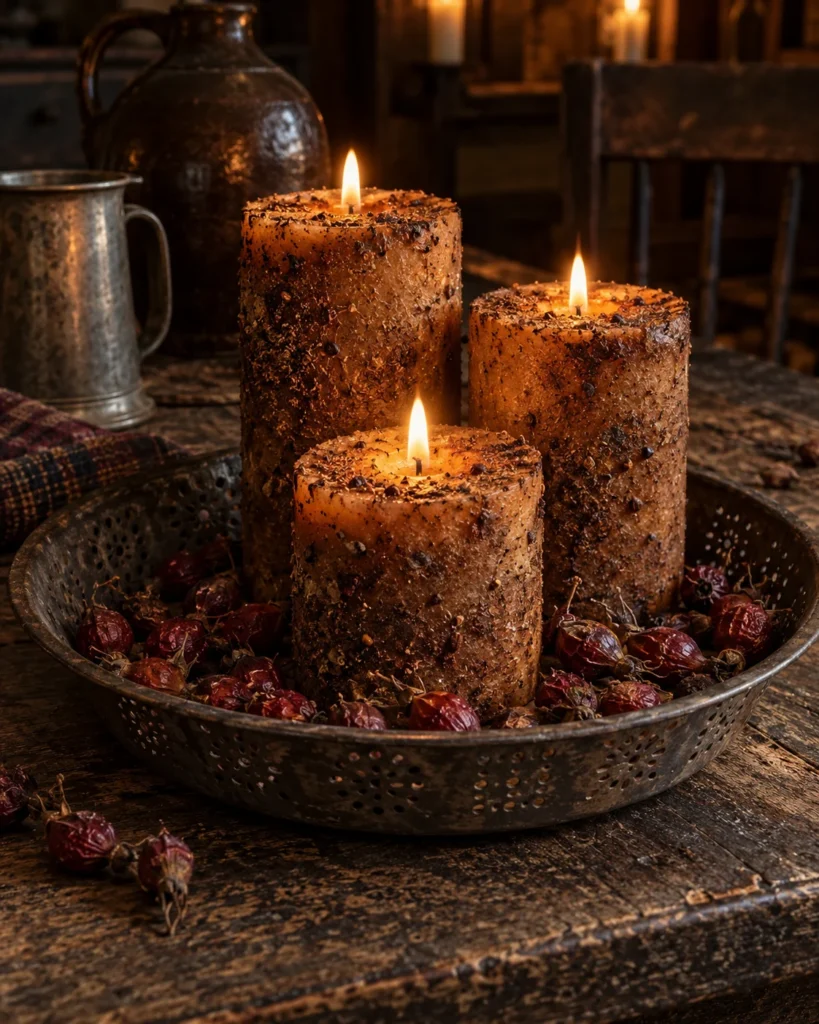
Feels like · colonial candle shop
The Historical Look and Era Vibe: Spice-dusted pillar candles sit in old punched-tin pie plates, ringed with dried rosehips. The flickering glow through the tin feels like an early American kitchen on a winter night.
Heritage Supplies to Gather:
- Three battery-operated wax pillar candles
- Ground cinnamon, nutmeg, instant coffee and vanilla extract
- Punched-tin pie plates or tart tins
- Dried rosehips
The Antiquing and Staging Secret: Melt a little old candle wax in a double boiler and brush a thin coat onto each battery pillar, keeping it off the flame window and switch. While it’s still warm, roll the candle in a mix of cinnamon, nutmeg and a pinch of instant coffee, then dab on a few drops of vanilla. Set them in the tins and scatter rosehips around the bases.
Home Balance and Fire-Safety Check: Battery pillars give the grubby look with zero risk, which matters once dried rosehips are involved. Group three candles together rather than scattering them so the display looks curated, not cluttered.
2. Hand-Stitched Osnaburg Crow and Star Ornaments
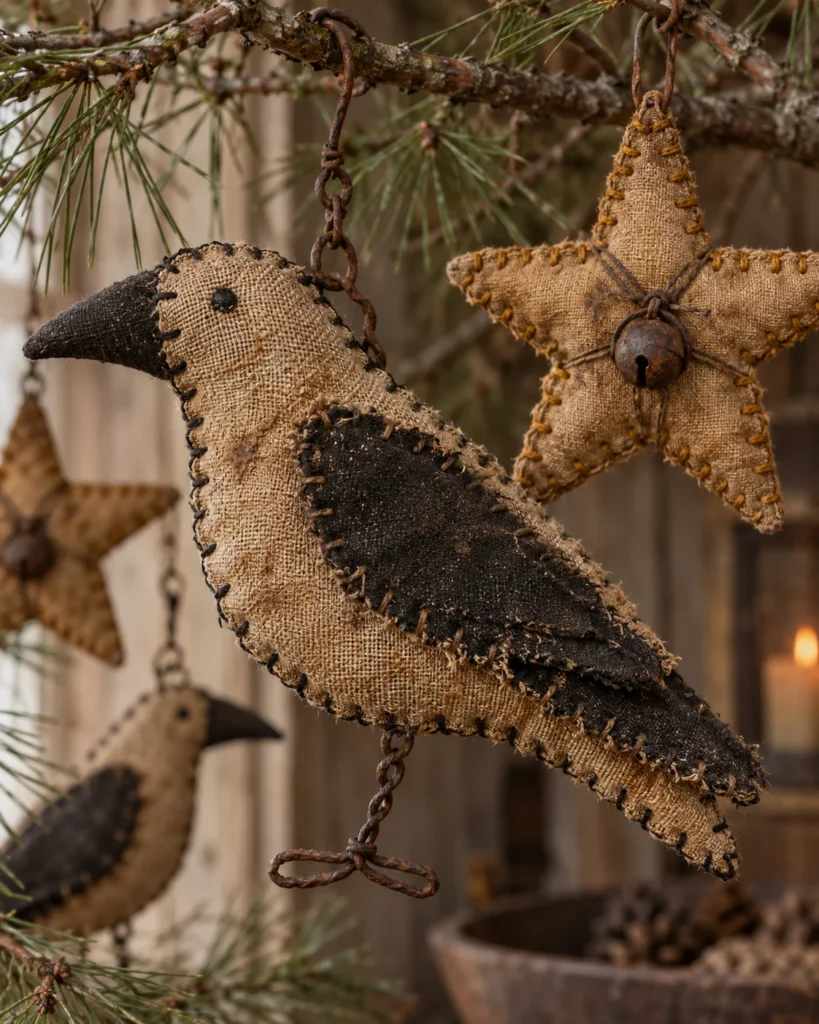
Feels like · pioneer sewing basket
The Historical Look and Era Vibe: Simple crows and stars cut from rough Osnaburg cotton, stitched with big visible stitches and stuffed until they’re plump. Hung on a sparse tree or a twig garland, they feel handmade by candlelight.
Heritage Supplies to Gather:
- Osnaburg cotton fabric
- Black and mustard embroidery floss
- Pine sawdust or cedar shavings mixed with polyester fill
- Rusty wire or jute for hangers
The Antiquing and Staging Secret: Tea-stain the fabric first by soaking it in strong black tea for 20 minutes, then let it dry in wrinkles. Cut two layers per shape, blanket-stitch the edges, and leave a small gap to stuff. Paint the crows with a thin coat of watered-down black acrylic for a worn finish.
Home Balance and Fire-Safety Check: Pets love soft dangling things, so hang these above cat height. Use a mix of sawdust and polyester fill so they stay light and don’t pull branches down.
3. Dark Trencher Trough With Sweetgum Pods and Cedar
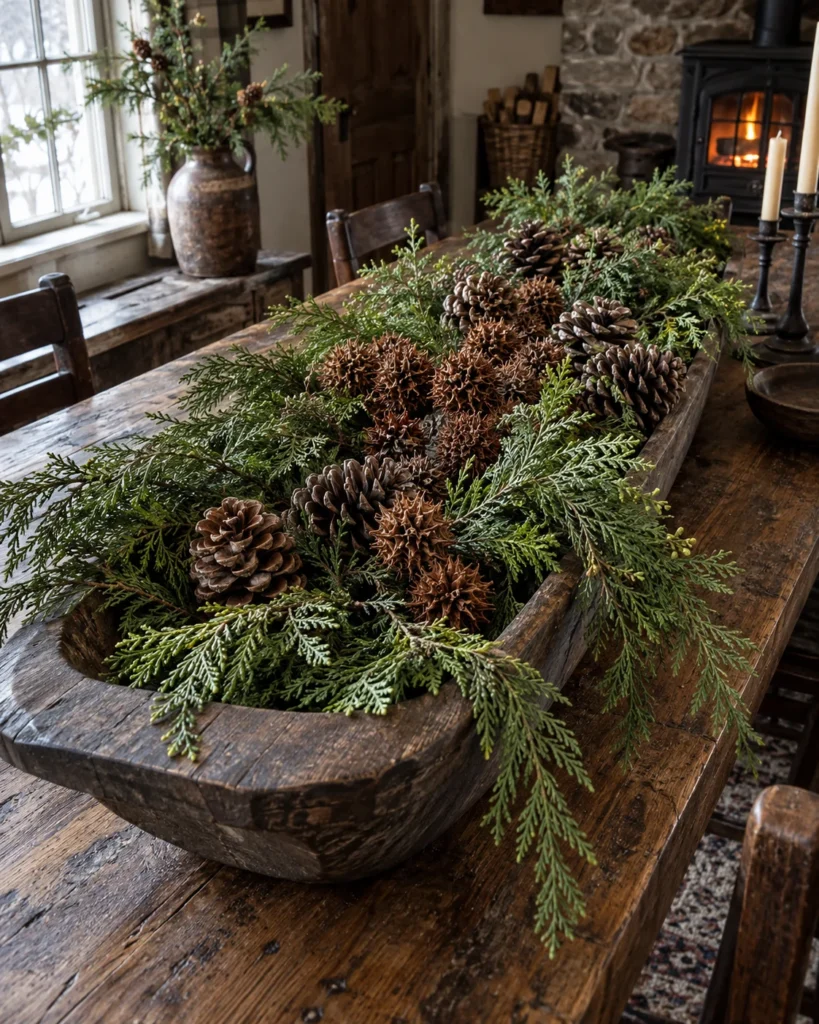
Feels like · gathered from the woods
The Historical Look and Era Vibe: A long, dark wooden trencher filled with spiky sweetgum seed pods, cedar clippings and a few pinecones. It looks like a bowl of treasures collected on a cold walk through the woods.
Heritage Supplies to Gather:
- A weathered wooden trencher or dough bowl
- Foraged sweetgum seed pods
- Fresh cedar clippings
- Crumpled brown paper and a wax paper liner
The Antiquing and Staging Secret: Line the trencher with wax paper, then fill it with crumpled paper so everything sits near the rim. Lay cedar along both sides so it spills over, and pile sweetgum pods down the center in a loose mound. The same raise-the-base trick works for any tray or bowl, like in my fall tray decor ideas.
Home Balance and Fire-Safety Check: Bake foraged pods at around 200°F for 30 minutes to kill any bugs before bringing them inside. Keep the trencher away from candles, since dry cedar catches easily.
4. Hand-Carved Saltbox Village in a Slatted Tobacco Basket
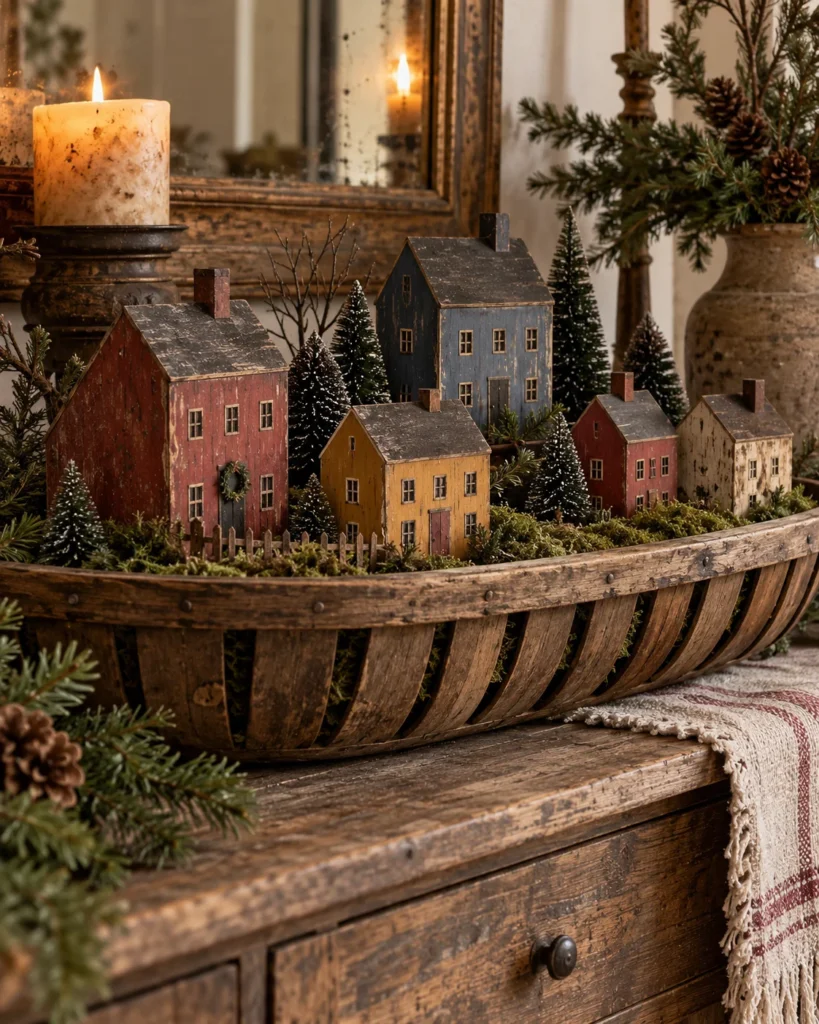
Feels like · New England village green
The Historical Look and Era Vibe: A little row of carved wooden saltbox houses, painted in faded red, mustard and slate, sits inside a wide, flat tobacco basket. It reads like a tiny colonial town tucked into the hills.
Heritage Supplies to Gather:
- 5 to 7 small wooden saltbox houses, carved or from scrap 2×4
- Milk paint or chalk paint in colonial colors
- A slatted tobacco basket
- Sheet moss and tiny bottle brush trees
The Antiquing and Staging Secret: Cut house shapes from scrap lumber with a steep saltbox roof sloping longer on the back. Paint, let dry, then sand the edges and rub with a little dark wax so they look handled for years. Lay moss in the basket and arrange the houses in a gentle curve with trees between them. Tobacco baskets hang beautifully on a wall too, the way I style baskets in my fall living room decor ideas.
Home Balance and Fire-Safety Check: Keep the village to one surface, like a console or wide windowsill. Spreading houses everywhere quickly tips into museum clutter.
5. Punched-Tin Star Topper With Drooping Ticking-Stripe Ribbon
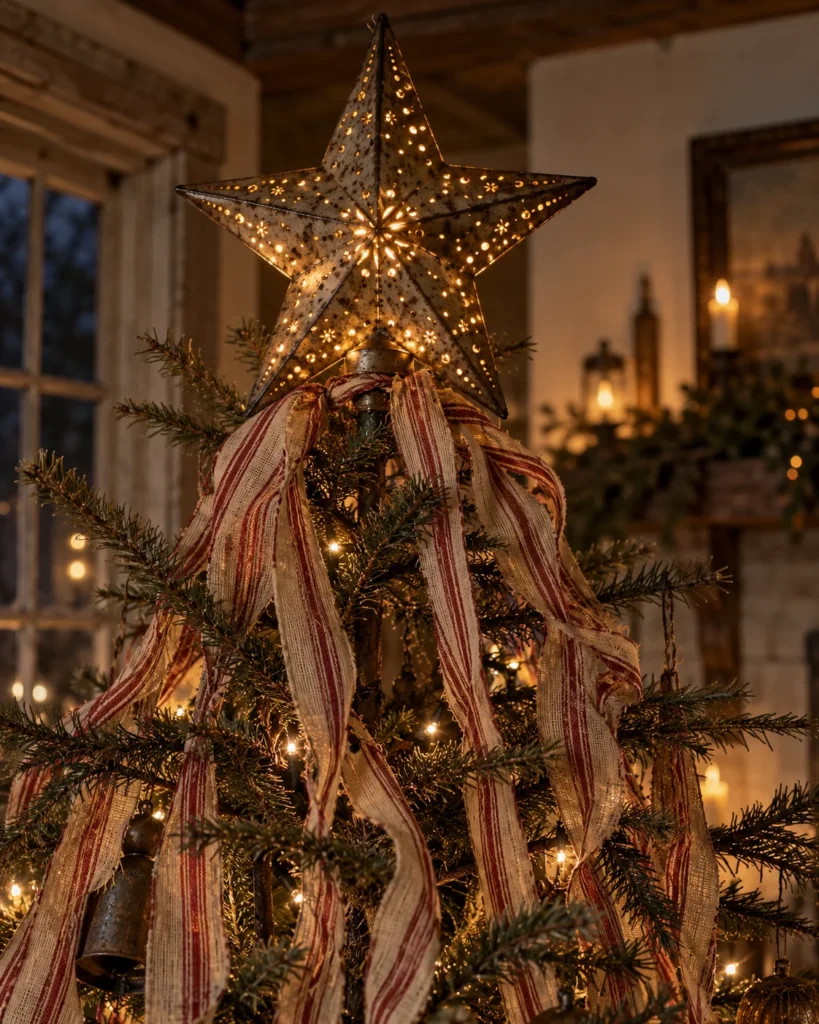
Feels like · lantern-lit barn loft
The Historical Look and Era Vibe: A heavy tin star with tiny punched holes tops the tree, with long tails of homespun ticking ribbon hanging down. When the tree lights glow behind it, little dots of light dance through the tin.
Heritage Supplies to Gather:
- A punched-tin star topper, around 8 to 10 inches
- Homespun ticking-stripe ribbon, 2 inches wide
- Floral wire and zip ties
- Warm white lights near the top of the tree
The Antiquing and Staging Secret: Wire the star to the top pole, using a zip tie for extra hold since tin is heavier than it looks. Tie two long lengths of ribbon behind it and let them droop unevenly down the tree. Tuck a few extra lights directly behind the star so the punched pattern glows.
Home Balance and Fire-Safety Check: Tin edges can be sharp, so wear gloves when handling. Use LED lights only behind the star, since tin traps heat from older bulbs.
A friend once filled every shelf, windowsill and tabletop in her dark-paneled living room with crocks, dried flowers, wooden bowls and tin. Her husband came home and asked, very gently, if they had moved into the back room of an antique mall.
The fix: Choose three or four strong vignettes per room and leave the rest of the surfaces clear. Primitive style looks best when each piece has breathing room.
6. Sparse Feather Tree in an Antique Cobalt Salt-Glazed Crock
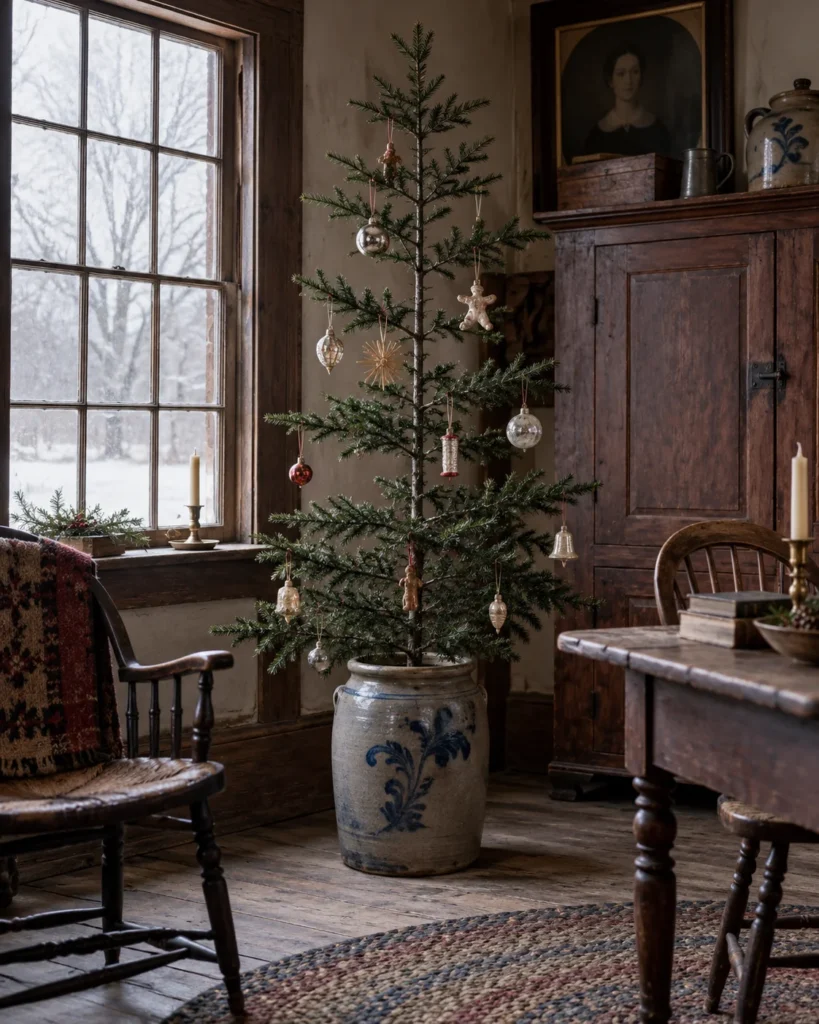
Feels like · German settler parlor
The Historical Look and Era Vibe: A slim, sparse feather tree stands in a grey stoneware crock painted with cobalt blue swirls. Its widely spaced branches hold just a few old ornaments, the way trees looked over a century ago.
Heritage Supplies to Gather:
- A 2 to 3 foot feather tree or reproduction
- An antique or reproduction cobalt salt-glazed crock
- Dried beans or sand for weight
- A handful of small vintage ornaments or homespun ones
The Antiquing and Staging Secret: Set the tree’s wooden base inside the crock and pour dried beans around it until it stands firm. Hang ornaments sparingly, one per branch tip at most. Tuck a strip of homespun around the top of the crock to hide the base.
Home Balance and Fire-Safety Check: Antique crocks can have hairline cracks, so never fill one with water. A sparse tree looks most authentic, so resist adding more ornaments.
7. Jute Kitchen Garland of Dried Apple Slices, Bay and Star Anise
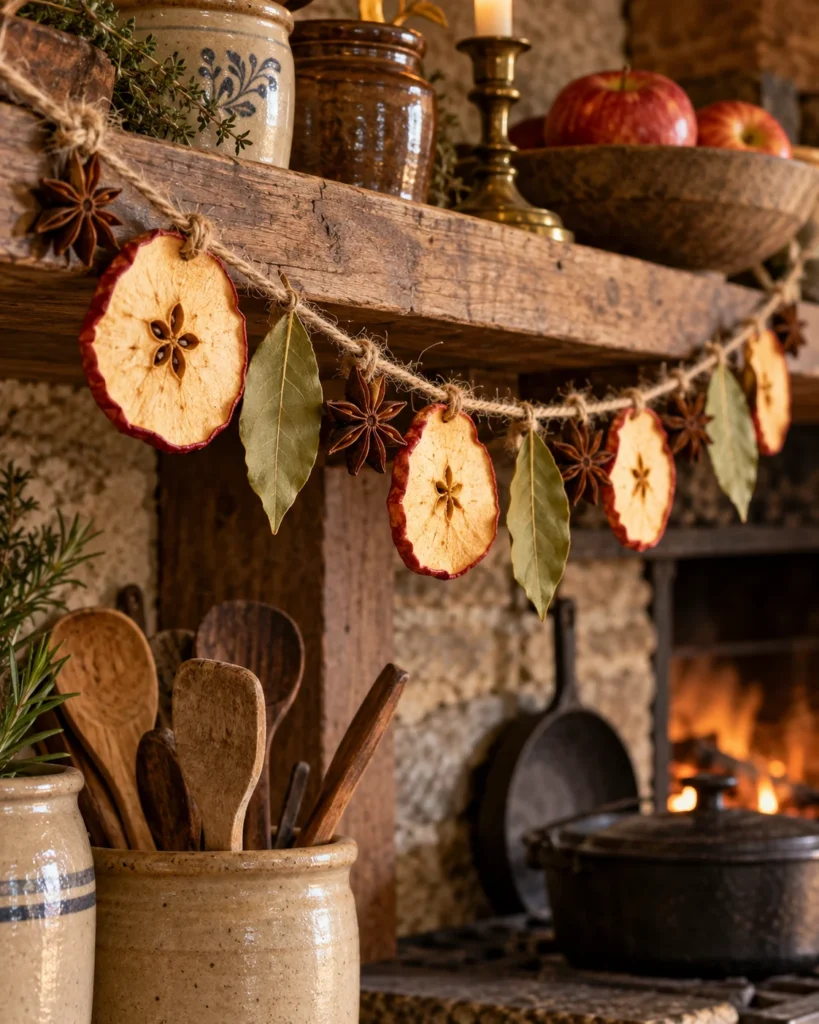
Feels like · colonial kitchen hearth
The Historical Look and Era Vibe: A rough jute string threaded with dried apple rings, bay leaves and whole star anise, draped across a kitchen window or open shelf. It looks like something a colonial cook hung to dry above the fire.
Heritage Supplies to Gather:
- 3 or 4 Rome or other red apples
- Dried bay leaves
- Whole star anise
- Raw jute twine and a large darning needle
The Antiquing and Staging Secret: Slice apples about 1/4 inch thick, dip them in lemon water to slow browning and bake at around 200°F for 3 to 4 hours, flipping once. Thread them on jute, alternating with bay leaves and a star anise tied in every few inches.
Home Balance and Fire-Safety Check: Dry apple slices fully before stringing, or they can mold. Keep the garland away from stovetop burners, since dried fruit and bay leaves catch fast.
8. Vintage Wool Penny Rug Runner on an Unfinished Pine Trestle
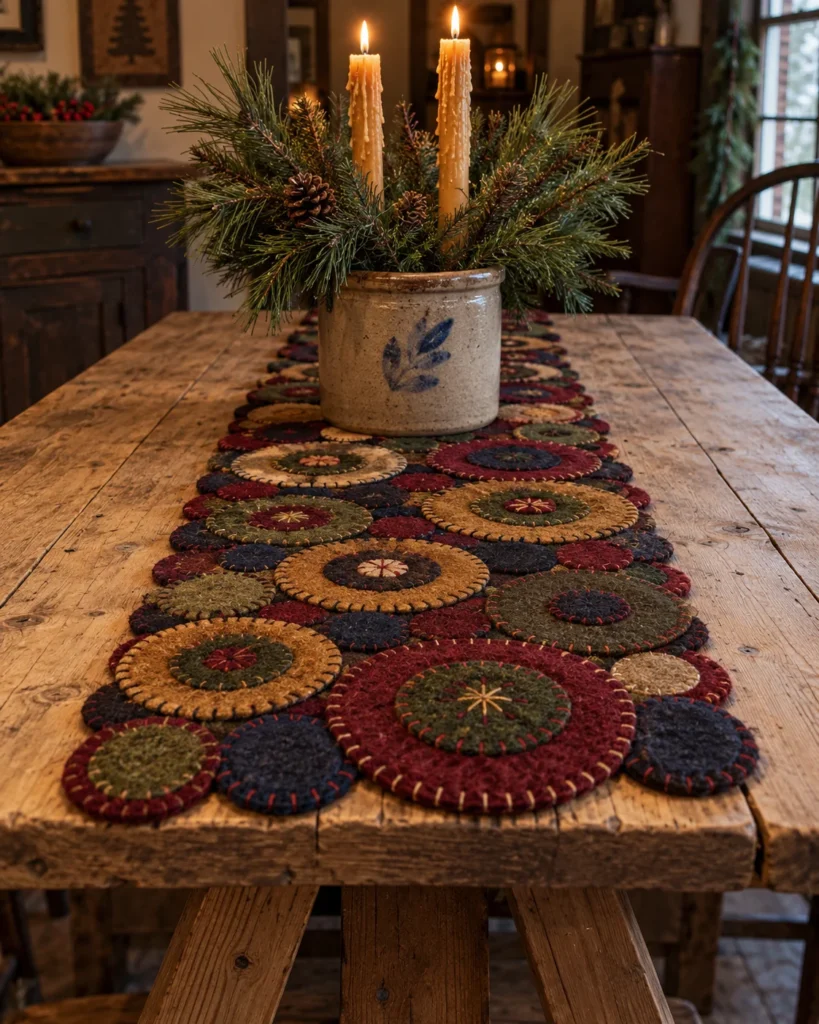
Feels like · grandma’s handwork
The Historical Look and Era Vibe: A wool penny rug, with its stacked circles of felted wool and blanket stitching, runs down a raw pine trestle table. It’s colorful, handmade and full of folk charm.
Heritage Supplies to Gather:
- A vintage or handmade wool penny rug runner
- A simple pine trestle table
- A low crock of greens for the center
- Two battery beeswax tapers
The Antiquing and Staging Secret: Lay the penny rug down the middle and let the ends hang slightly over the table edges. Keep the centerpiece low and simple so the wool pattern stays the star, a rule I follow in my neutral dining room centerpiece styling guide.
Home Balance and Fire-Safety Check: Wool is precious and attracts moths, so store it wrapped in cotton with cedar blocks after the season. Fold it up before dinner if gravy is on the menu.
9. Rusted Iron Sleigh Bells on Worn Leather Harness Straps
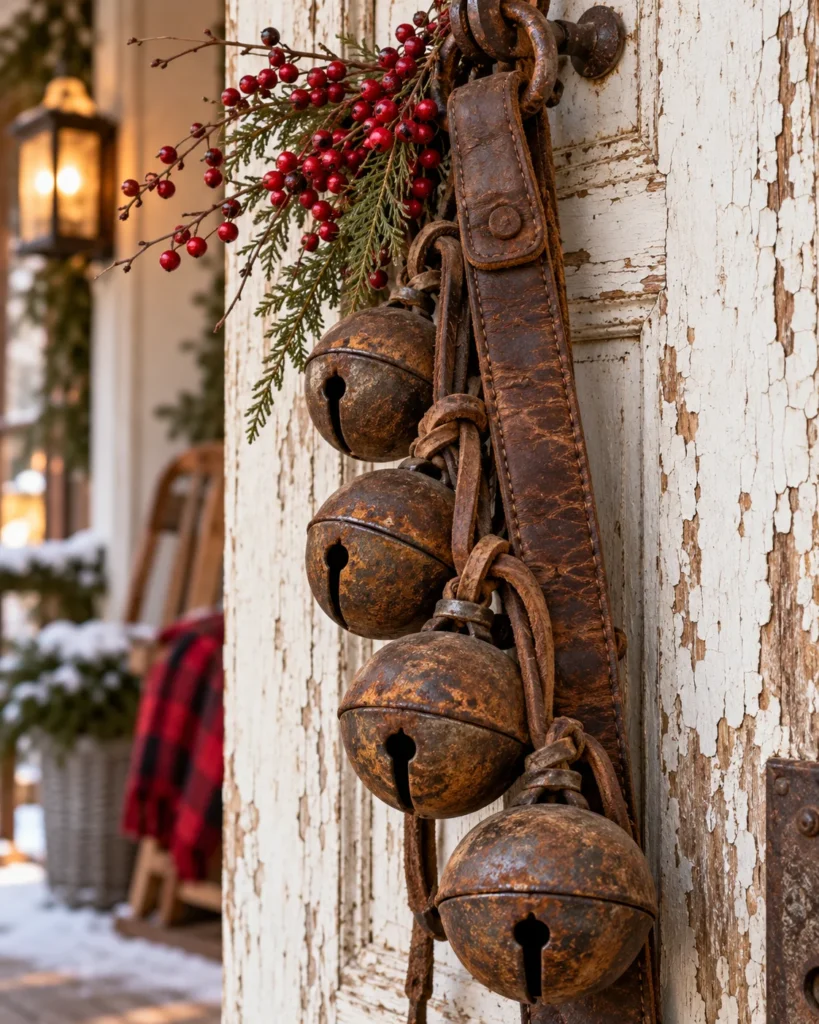
Feels like · horse-drawn sleigh ride
The Historical Look and Era Vibe: A worn leather strap studded with rusty iron sleigh bells and tucked with pip berry sprigs hangs on the front door. It jingles every time someone comes home, just like a farm sleigh.
Heritage Supplies to Gather:
- An old leather belt or harness strap
- 5 to 7 iron sleigh bells
- Faux pip berry sprigs in red or mustard
- Leather lacing or wire
The Antiquing and Staging Secret: To age new bells, spray them with a mix of vinegar and salt and let them sit outside for a day or two until they rust. Lace the bells onto the strap every few inches and wire a cluster of pip berries at the top buckle.
Home Balance and Fire-Safety Check: Rust can stain painted doors, so put a felt pad behind the strap. Seal rusty bells with matte clear spray once they reach the color you like.
10. Aged Pastry Board Backsplash Leaner With Hand-Lettered Hymn
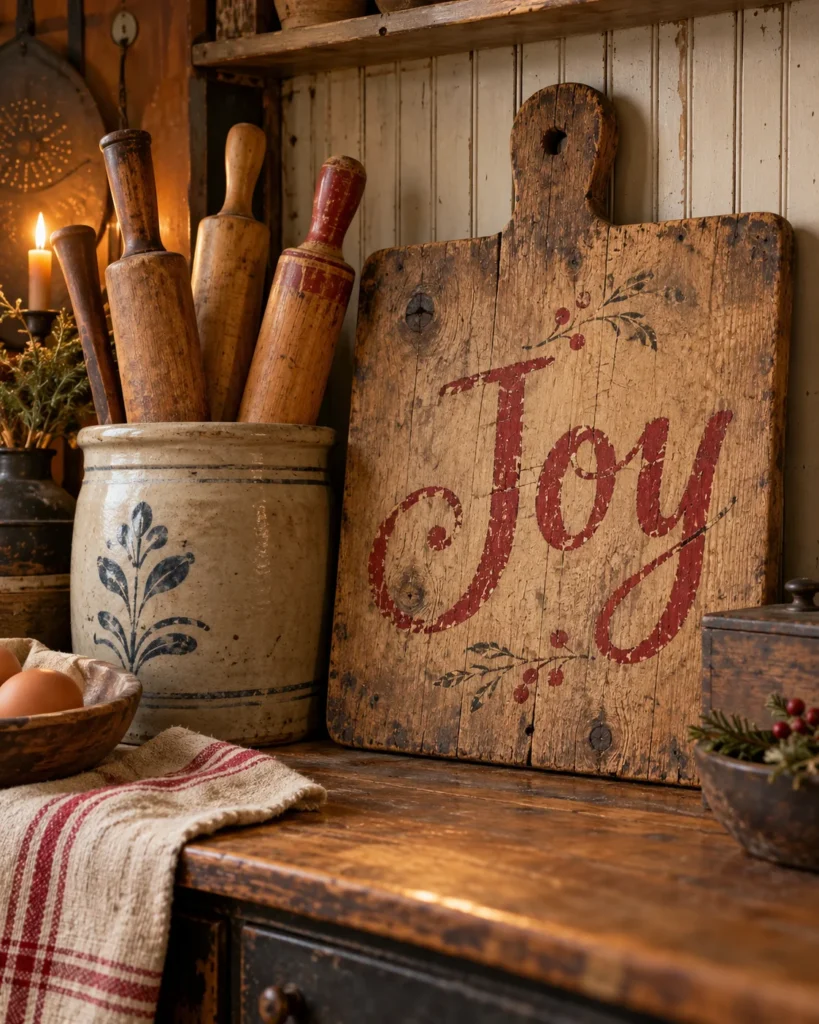
Feels like · settler’s kitchen blessing
The Historical Look and Era Vibe: An old wooden pastry board leans against the kitchen backsplash, hand-lettered with a faded line from a public domain hymn or a simple “Joy” or “Peace.” It adds quiet meaning to an everyday spot.
Heritage Supplies to Gather:
- A thrifted wooden pastry or bread board
- Letter stencils or a paint pen
- Black or barn red milk paint
- Fine sandpaper
The Antiquing and Staging Secret: Pencil the words lightly, then paint them in a simple early American script. Once dry, sand across the letters gently so the wood grain shows through and they look faded by time.
Home Balance and Fire-Safety Check: Keep the board well away from the stove and any burners. Lean it on the counter behind a crock of utensils so it can’t slide.
A reader once lit real tapers in her mantel display, surrounded by dried wheat, moss and old straw. One wick leaned just a bit, and a strand of wheat caught. She put it out in seconds, but the scorch mark on her antique mantel board is still there.
The fix: In any display with dried botanicals, use flameless LED tapers. Good ones flicker so realistically that guests rarely notice.
11. Homespun-Tied Amber Apothecary Jars With Cedar and Berries
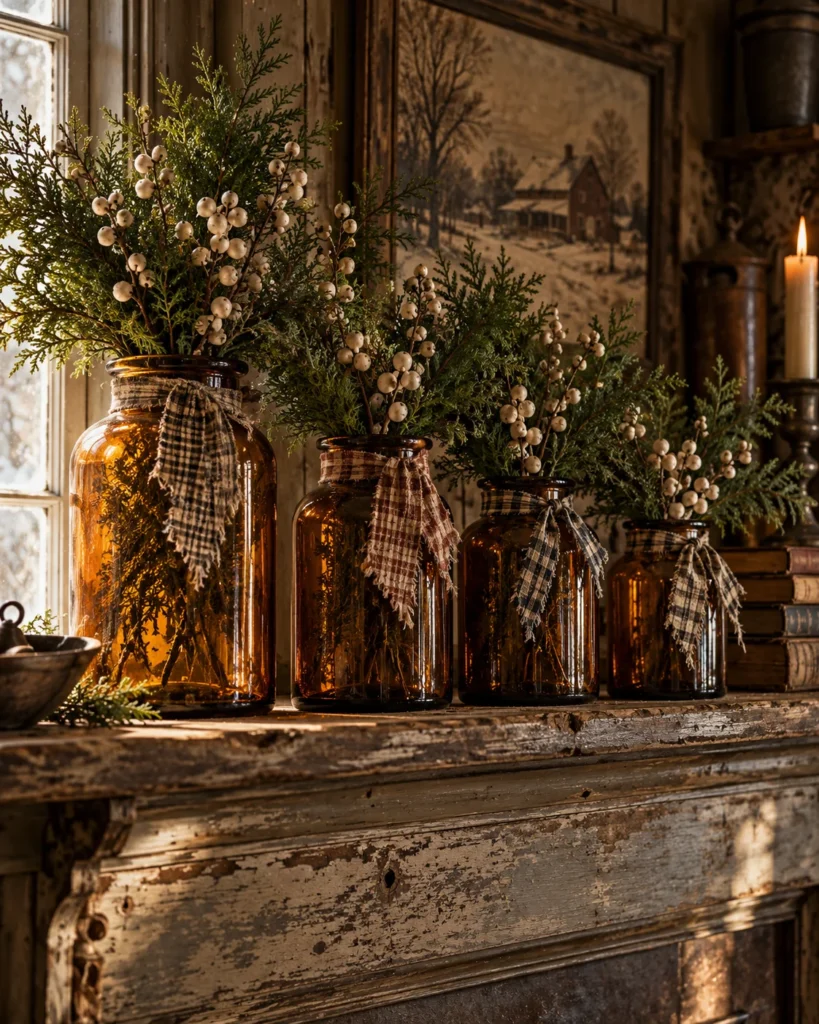
Feels like · country general store
The Historical Look and Era Vibe: Amber glass jars filled with cedar and pale berries, each tied at the neck with a torn strip of homespun. Lined up on a shelf, they look like an old general store’s back counter.
Heritage Supplies to Gather:
- 3 to 5 amber glass apothecary jars
- Short cedar sprigs
- Faux white tallow-style berry picks
- Torn strips of checked homespun fabric
The Antiquing and Staging Secret: Tear homespun into 1 inch strips so the edges fray naturally, and knot one around each jar neck. Fill jars with cedar, then poke a berry pick into each so it peeks out the top. Line them up in mixed heights.
Home Balance and Fire-Safety Check: Real Chinese tallow berries are toxic and the tree is invasive in many areas, so use faux berry picks instead, especially with kids or pets around.
12. Stenciled Burlap Feed Sacks by the Hearth With Birch Kindling
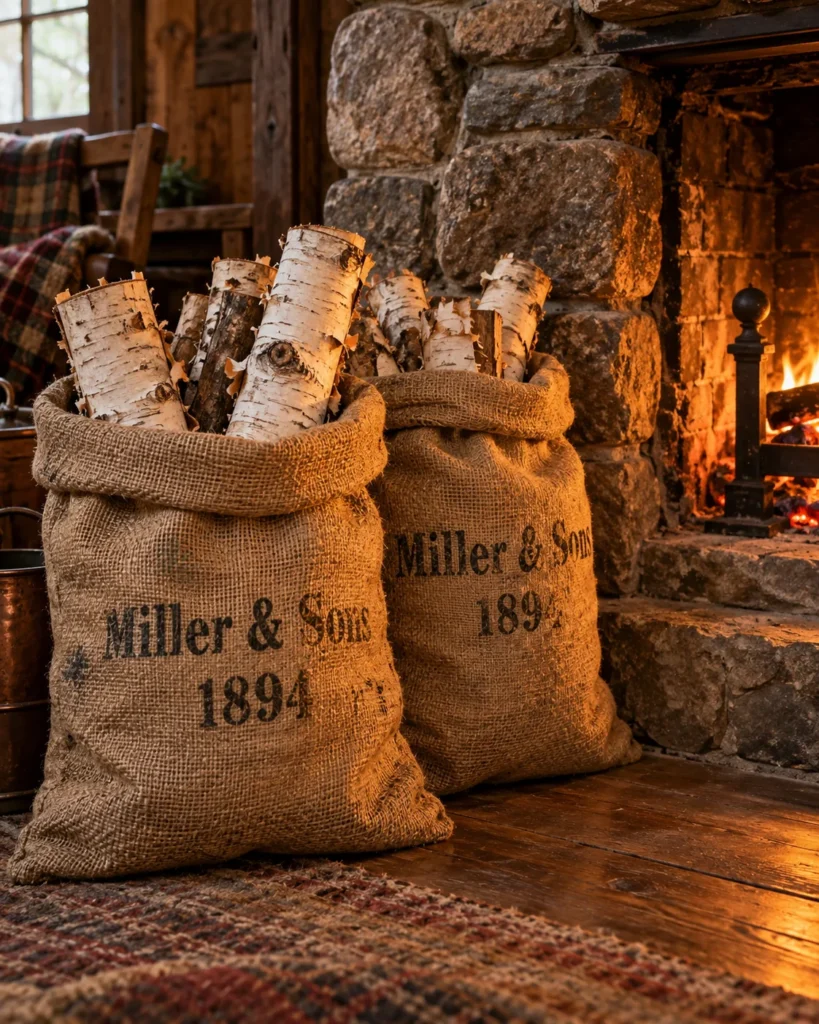
Feels like · cabin woodpile corner
The Historical Look and Era Vibe: Two slouchy burlap feed sacks, stenciled with faded farm lettering, sit beside the hearth filled with birch kindling. It’s simple and practical, like a cabin corner ready for a long winter.
Heritage Supplies to Gather:
- Two burlap feed or coffee sacks
- Letter stencils and faded black fabric paint
- Birch kindling and small logs
- Crumpled newspaper for the bottom
The Antiquing and Staging Secret: Stencil simple lettering like a farm name and a year, then dab off extra paint with a dry cloth so it looks faded. Fill the bottom with newspaper, stand birch upright inside and fold the top edge down. This hearth corner pairs naturally with the mantel styling in my Thanksgiving mantel decor ideas.
Home Balance and Fire-Safety Check: Keep the sacks at least 3 feet from a working fireplace or wood stove. Burlap and dry kindling are both very flammable.
13. Wooden Mill Bobbin Candle Riser With Dipped Beeswax Tapers
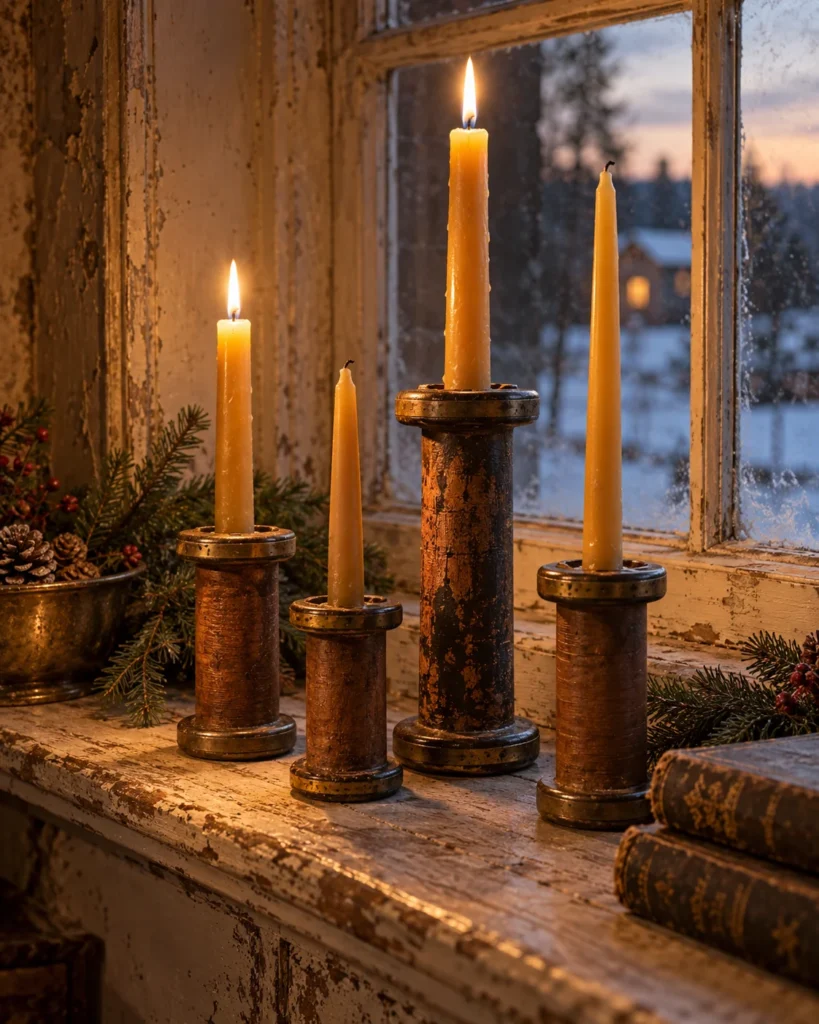
Feels like · old textile mill
The Historical Look and Era Vibe: Old wooden thread bobbins stand in a cluster as candleholders, each holding a hand-dipped beeswax taper. The worn wood and honey wax look beautiful together on a windowsill or long table.
Heritage Supplies to Gather:
- 5 to 7 antique wooden mill bobbins
- Flameless beeswax-look LED tapers or real tapers for flame-safe spots
- A drill with a bit matched to the taper base
- A long wooden board as a base
The Antiquing and Staging Secret: Drill a hole about 1 inch deep into the top of each bobbin so the taper fits snugly. Group them on a board in mixed heights. My warm cozy home lighting ideas explain how a low cluster of candlelight like this warms up a dark-wood room.
Home Balance and Fire-Safety Check: Old dry wood plus real flame is risky. Use LED tapers here, or if you burn real beeswax, add a metal candle cup to each bobbin and never leave them unattended.
14. Salvaged Quilt Ladder With Red-and-Tan Feedsack Quilts
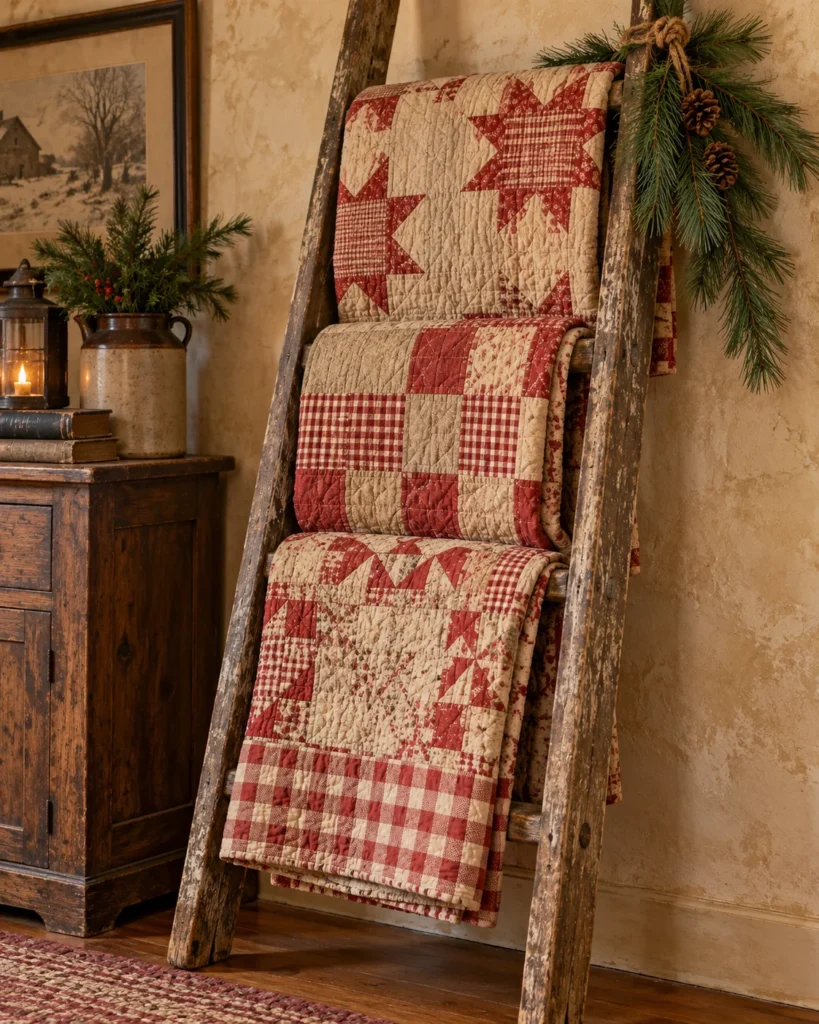
Feels like · grandmother’s cedar chest
The Historical Look and Era Vibe: A weathered wooden ladder leans against the wall, draped with folded red and tan check quilts and a few pine sprays tucked at the top rungs. It’s cozy, colorful and shows off old textiles beautifully.
Heritage Supplies to Gather:
- A salvaged wooden ladder, 5 to 6 feet
- 2 or 3 feedsack or check quilts
- Faux or fresh pine sprays
- Rubber furniture pads
The Antiquing and Staging Secret: Fold quilts in long thirds and drape each over a different rung so the patterns show in layers. Tuck pine sprays at the top corners only. Layering textiles like this is my favorite way to warm a room, as I show in my cozy Thanksgiving living room ideas.
Home Balance and Fire-Safety Check: Keep antique quilts out of direct sunlight, which fades them fast, and away from cat claws. Rubber pads under the ladder feet stop it from sliding on wood floors.
15. Cast-Iron Hearth Kettle With Clove-Studded Orange Peel and Cinnamon Bark
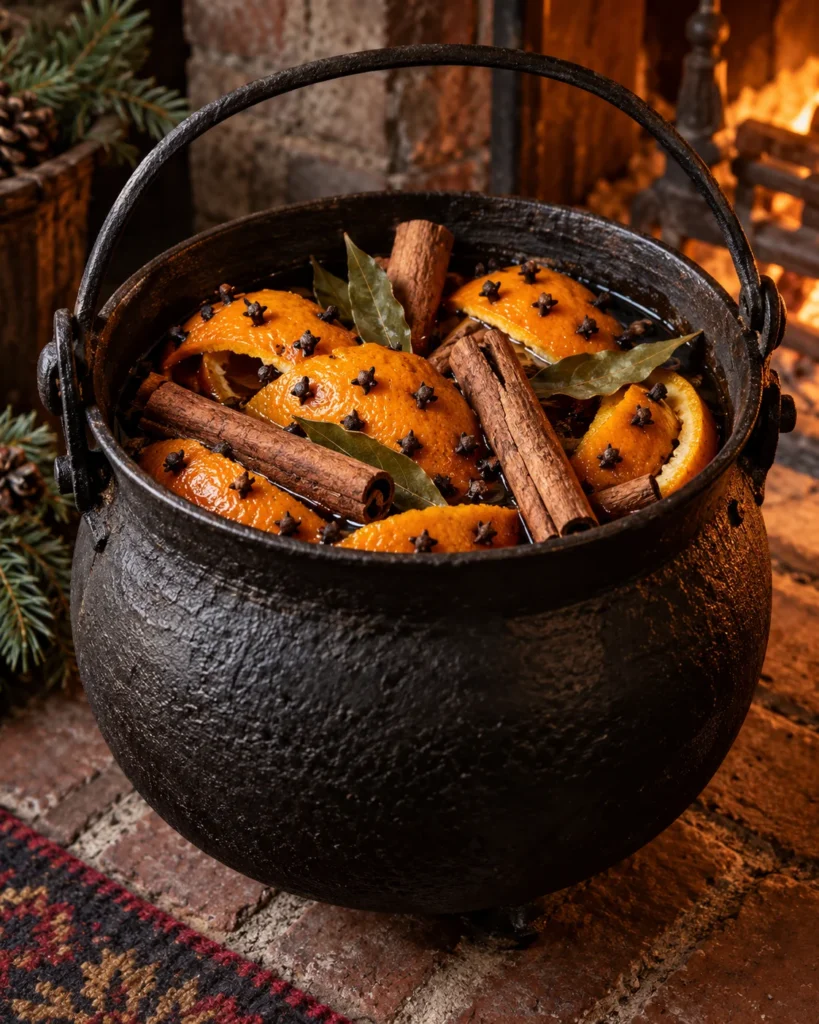
Feels like · spiced colonial kitchen
The Historical Look and Era Vibe: An old black cast-iron kettle filled with clove-studded orange peels and curls of cinnamon bark sits on the hearth or stove. It looks and smells like a colonial kitchen on Christmas morning.
Heritage Supplies to Gather:
- A cast-iron kettle or Dutch oven
- Orange peels and whole cloves
- Cinnamon bark sticks
- A few bay leaves
The Antiquing and Staging Secret: Press cloves into wide strips of orange peel in simple rows. For display, pile them dry in the kettle with cinnamon bark. For scent, add water and simmer gently on the stovetop for an hour or two.
Home Balance and Fire-Safety Check: Only simmer on a stovetop you’re watching, and top up the water so it never boils dry. When it’s just for display on the hearth, keep it dry and away from any open fire.
3 Practical Rules for Authentic Primitive Styling
- Use flameless candles near dried botanicals. Straw, moss, dried wheat and pine needles catch in seconds. Realistic flickering LED wax tapers and pillars give the same old-world glow without the danger, and many have timers so they switch on at dusk.
- Try the 20-minute coffee-stain recipe. Brew a strong pot of coffee, add a tablespoon of instant coffee and a splash of vinegar, then soak white lace or cotton for about 20 minutes. Wring it out, scrunch it while damp and let it air dry for that warm, 100-year-old patina.
- Pair dark woods with light walls. Cream, warm beige or lime-washed walls give heavy primitive pieces a soft backdrop, so the room feels warm instead of cave-like. If your walls are dark, add lighter homespun and plenty of warm glow.
Frequently Asked Questions
What makes Christmas decor officially considered primitive?
Primitive decor draws on early American and colonial country homes, with handmade, worn and simple pieces. Think homespun fabrics, old wood, punched tin, crocks and dried botanicals with a muted, aged look.
How do you make DIY grubby candles with cinnamon for primitive displays?
Brush a thin coat of melted wax onto a candle, then roll it in cinnamon, nutmeg and a pinch of instant coffee while it’s still warm. A few drops of vanilla add scent, and battery pillars work well for safety.
What are the traditional colors used in primitive Christmas decor?
Muted turkey red, mustard yellow, colonial slate blue, deep green and natural homespun cream are the classics. They’re always soft and aged, never bright or glossy.
There’s real peace in a slower, simpler Christmas. A handful of homespun ornaments, a crock of greens and a soft candle glow can make a home feel warmer than any shopping cart full of glittery decor. Choose a few of these primitive Christmas decorating ideas, give each piece room to breathe and enjoy the quiet. Then save your favorite primitive layout to Pinterest so it’s ready for next year.