22 Primitive Scarecrow Ideas That Actually Look Vintage, Not Dollar-Store
There is a quiet, nostalgic warmth to autumn that brightly colored, plastic store-bought decorations simply cannot capture.
A true primitive scarecrow looks like something stitched together on an 1800s prairie homestead, using scraps of homespun flannel, weather-worn burlap, rusty safety pins, and the warm scent of cinnamon and coffee-stained muslin.
The secret to authentic folk-art charm, without ending up with a soggy, moldy pile of straw after the first October rain, is knowing how to age your fabrics and anchor your frames against autumn wind.
Below are 22 primitive scarecrow ideas built around time-tested crafter recipes, durable weather-proofing tricks, and the cozy rustic styling that gives your front porch genuine handmade character.
Primitive Scarecrow Style Selector
Before you gather a single scrap of burlap, figure out where this scarecrow is actually going to live. That decides your base, your materials, and how much weather it needs to survive.
| Style | Base Material | Weather Resistance | Best Display Spot |
|---|---|---|---|
| Grubby Muslin Sitter | Coffee-stained muslin over hidden polyfill | Moderate, best under a covered porch | Porch bench or rocking chair |
| Full Porch Rocker Sentinel | Burlap and homespun plaid over a stuffed frame | Good, built for weeks outdoors | Front porch, seated in a rocking chair |
| Burlap T-Frame Yard Stake | Burlap sack body on a wooden T-frame | Best, anchored deep in the ground | Open yard or garden bed |
| Mini Etagere Doll | Small burlap and muslin doll, lightly stuffed | Indoor or covered spot only | Shelf, mantel, or entry table |
1. Coffee-Stained Burlap Sitter on a Vintage Milk Can
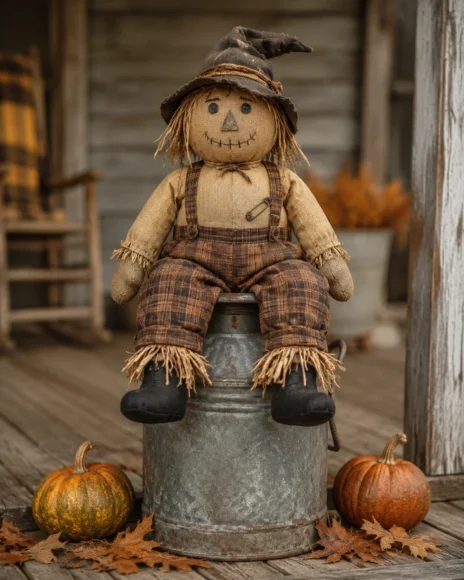
Feels like · a coffee-stained flea market find
Perching a coffee-stained sitter on an old milk can gives it height and a real farmhouse prop instead of just propping it against a wall.
The Folk-Art Vibe: Early American prairie charm, the kind that looks collected over decades.
Handmade Material and Framing: Coffee-stained burlap body over a lightly stuffed muslin torso, seated pose.
Weathering and Display Detail: Deep coffee stain wash, rusty safety pin at the collar, raffia peeking from the cuffs.
2. Homespun Plaid Porch Sentinel in a Rocking Chair
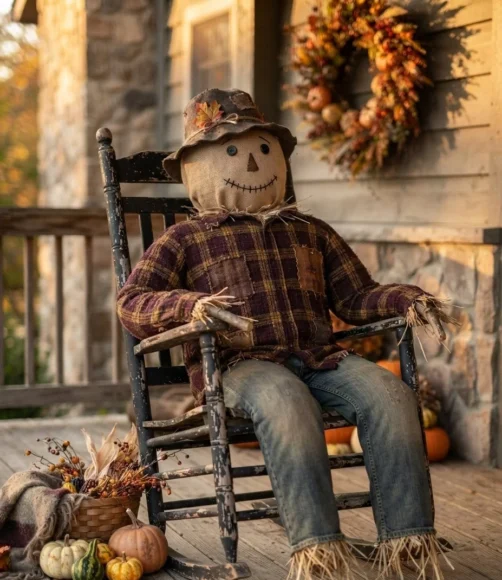
Feels like · grandma’s porch on a crisp October evening
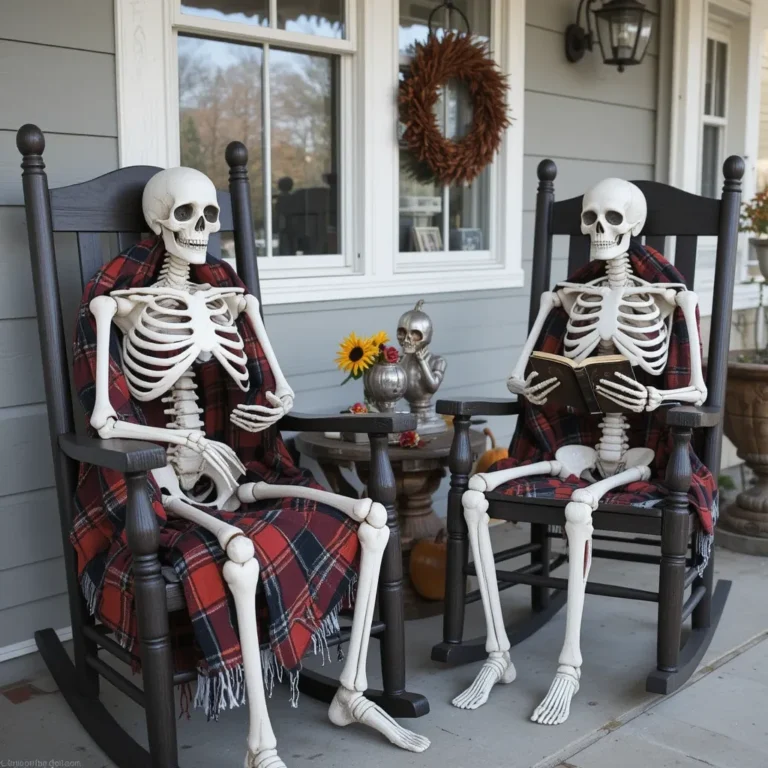
A scarecrow seated in an actual rocking chair reads as a real character sitting on the porch, not a decoration propped up for the season.
The Folk-Art Vibe: Porch Rocker Sentinel, deep reds and browns, unmistakably a farmhouse fixture.
Handmade Material and Framing: Homespun plaid shirt over a full stuffed frame, wooden stick arms.
Weathering and Display Detail: Straw tucked at the wrists and collar only, zip-tied loosely to the chair for wind stability.
The Grubby Coffee and Cinnamon Staining Recipe
This is the one trick that separates a genuinely primitive scarecrow from a costume shop prop. Dissolve a few tablespoons of instant coffee granules in warm water, then add a splash of vanilla extract and a spoonful of cinnamon powder. Dip your burlap, muslin, or osnaburg fabric into the mixture, wring it out, and either sun-dry it flat outside or bake it at a low oven temperature until it dries. The result is a natural, uneven aged patina along with a warm, sweet smell that plain fabric dye can never fake.
A word of caution from experience, do not skip the wring-out step. I once left a batch too wet before baking it and came back to find the corners had started growing a faint mold spot before the fabric even fully dried. Wring it firmly, lay it flat, and give it real time to dry all the way through before you stitch it onto anything. If you love this kind of layered, gathered styling, a few tricks from these fall basket ideas pair nicely with a coffee-stained scarecrow display.
3. Burlap Sack Pumpkin-Head Scarecrow
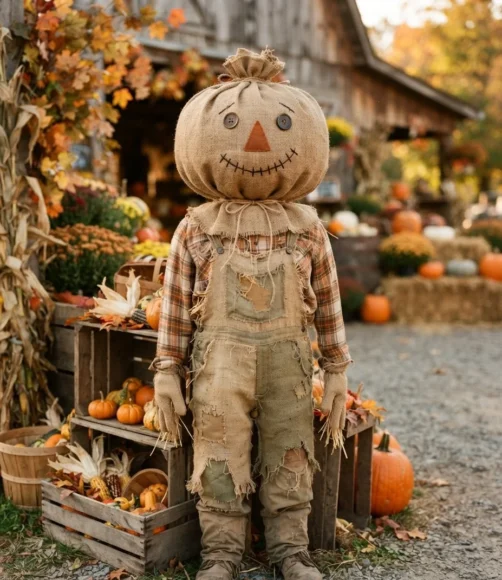
Feels like · a pumpkin patch stand at golden hour
Shaping the burlap head with a soft pumpkin curve instead of a flat sack ties the scarecrow directly into the rest of your fall display.
The Folk-Art Vibe: Playful harvest charm without tipping into anything cartoonish.
Handmade Material and Framing: Burlap sack head stuffed and gathered at the base, feed sack body.
Weathering and Display Detail: Burnt orange felt triangle nose, hand-stitched black floss smirk.
4. Rocking Chair Porch Scarecrow with Raffia Cuffs
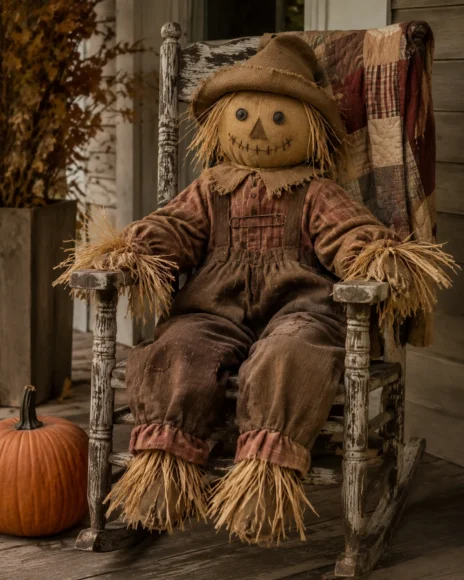
Feels like · an old rocking chair that’s seen a hundred autumns
Raffia cuffs at the wrists give just enough texture to read as straw without the mess of stuffing the whole sleeve full of it.
The Folk-Art Vibe: Classic porch rocker sentinel, quiet and welcoming.
Handmade Material and Framing: Burlap body over a shredded outdoor polyfill core, wooden stick arms.
Weathering and Display Detail: Dried raffia tied tightly at each wrist, rusty safety pin holding the collar closed.
5. Primitive Crow Companion on the Shoulder
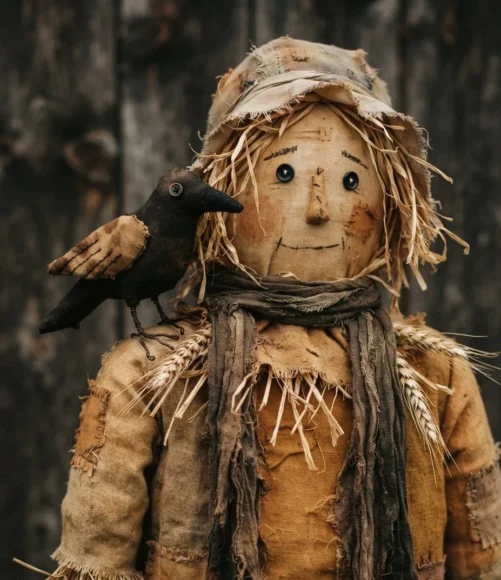
Feels like · a scarecrow with a mischievous secret
A small fabric crow perched on the shoulder is a classic primitive motif that adds character without adding any real bulk to the design.
The Folk-Art Vibe: Traditional folk-art motif, straight out of an old farmhouse painting.
Handmade Material and Framing: Small black muslin crow, lightly stuffed, wired feet to grip the shoulder.
Weathering and Display Detail: Coffee-stained wings for texture, tiny antique button eye on the crow itself.
6. Osnaburg Muslin Sitter with Triangle Nose
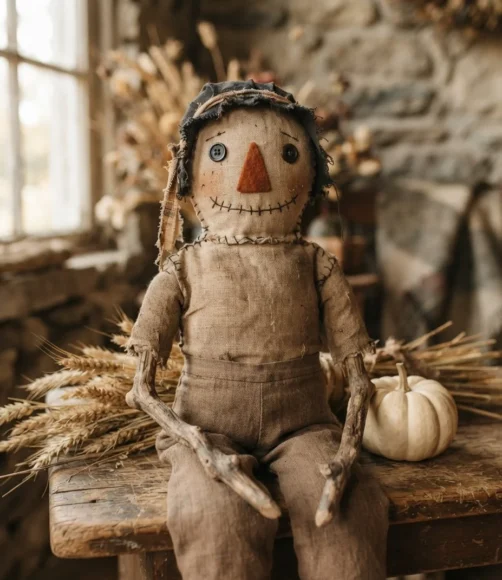
Feels like · a prairie homestead at harvest time
Osnaburg cotton has a rougher, more natural weave than plain muslin, which makes it one of the most authentically primitive fabrics you can start with.
The Folk-Art Vibe: Undyed, natural, and closest to true 1800s prairie styling.
Handmade Material and Framing: Osnaburg muslin body, wooden stick frame, coarse hand stitching throughout.
Weathering and Display Detail: Wool felt triangle nose in burnt orange, mismatched button eyes for folksy charm.
7. Rusty Tin Button Eyes and Hand-Stitched Smile
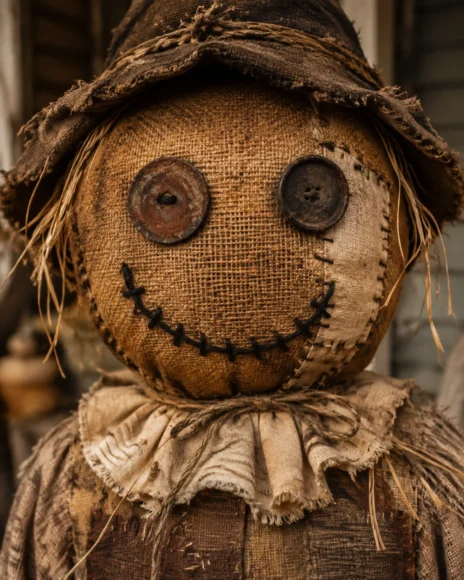
Feels like · hand-me-down charm, stitched with love
The face is where a scarecrow either reads as authentic or as a costume, and mismatched rusty buttons make all the difference.
The Folk-Art Vibe: Folksy and slightly crooked, exactly how a handmade face should look.
Handmade Material and Framing: Burlap face panel stitched onto the muslin head.
Weathering and Display Detail: Rusty mismatched tin buttons for eyes, coarse black embroidery floss for the smirk.
8. Feed Sack Fabric Patchwork Scarecrow
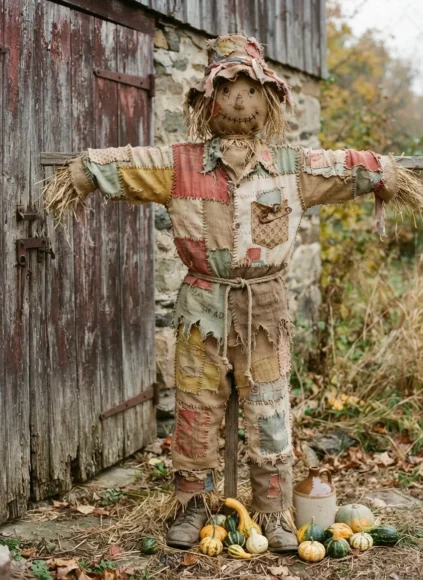
Feels like · a quilt passed down three generations
Real feed sack fabric, or a good reproduction print, carries its own history and pattern that instant primitive style is hard to fake with anything new.
The Folk-Art Vibe: Patchwork prairie charm, warm and lived-in.
Handmade Material and Framing: Feed sack fabric scraps patchworked over a burlap base, coarse cross-stitching joining the panels.
Weathering and Display Detail: Intentionally uneven stitching, a single rusty safety pin holding a pocket closed.
Outdoor Weather-Proofing and Straw-Rot Prevention
Real straw looks beautiful for about two weeks outdoors, then the first real rain soaks it through and it turns into a soggy, fungus-prone mess that smells worse every day it sits there. The fix most experienced crafters use is to build the actual body out of something that will not rot, shredded outdoor polyfill or even clean plastic grocery bags scrunched up for bulk, then only bring in real dried straw or raffia at the wrists, collar, and ankles where it actually shows. That gives you the authentic texture in every photo without the mess hiding underneath.
For anything standing on its own in the yard, anchor a wooden T-frame stake 12 to 18 inches deep into the ground so it survives a real fall storm without toppling. If you would rather skip the digging, zip-tie the frame securely to a heavy wooden rocking chair or a hay bale instead, both give you enough weight and stability to hold against wind. A scarecrow that faceplants in the yard after one windy night is not the primitive charm anyone is going for.
9. Corn Stalk Bundle Scarecrow Frame
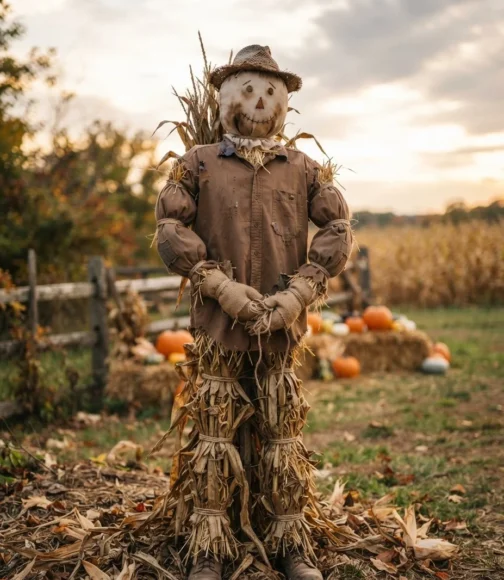
Feels like · a cornfield at the edge of dusk
Building the base out of bundled corn stalks instead of a plain wooden frame gives the whole scarecrow real harvest texture from the ground up.
The Folk-Art Vibe: True harvest homestead, straight from an actual autumn field.
Handmade Material and Framing: Bundled dried corn stalks tied with twine as the leg and torso base.
Weathering and Display Detail: Burlap wrapped at the joints, staked deep with a T-frame for wind stability.
10. Felt Triangle Patch Face on Burlap
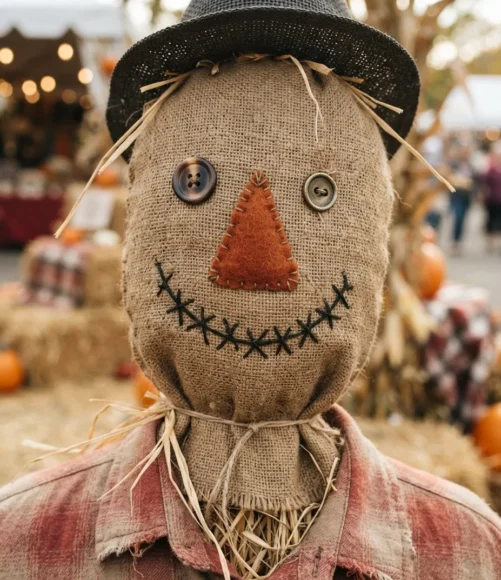
Feels like · a felt-and-flannel county fair booth
A simple wool felt triangle for the nose is one of the easiest details to get right, and it instantly reads as handmade rather than manufactured.
The Folk-Art Vibe: Cheerful county fair charm without losing the rustic edge.
Handmade Material and Framing: Burlap face base, hand-sewn burnt orange felt triangle nose.
Weathering and Display Detail: Coarse cross-stitch smile, antique mismatched button eyes for a slightly crooked charm.
11. Tin-Can Lantern Companion at the Base
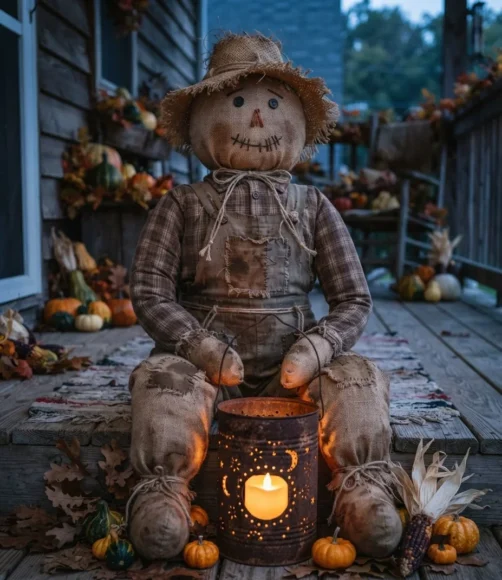
Feels like · a lantern-lit barn at night
Setting a punched tin-can lantern at the scarecrow’s feet gives the display real presence once the sun goes down, without needing electric lights.
The Folk-Art Vibe: Warm, glowing, and a little bit magical after dark.
Handmade Material and Framing: Recycled tin can, hand-punched with a simple star or moon pattern.
Weathering and Display Detail: Rust naturally left on the tin, battery tea light inside for safety on a wooden porch.
12. Rusty Bell Detail on the Collar
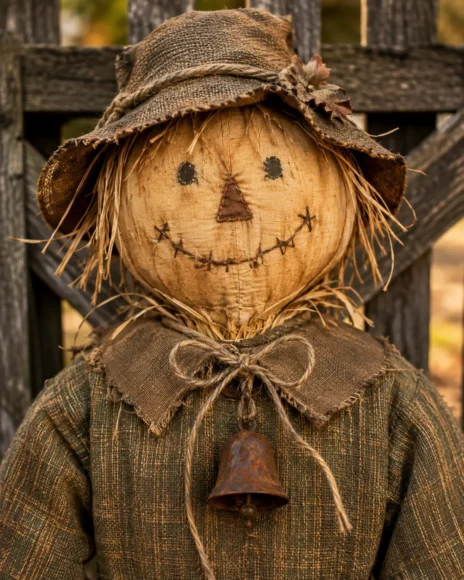
Feels like · an old farm gate creaking in the wind
A single rusty bell tied at the collar adds a small sound detail that most scarecrows never think to include, and it makes the porch feel alive on a windy evening.
The Folk-Art Vibe: A working farm sensibility, functional details over pure decoration.
Handmade Material and Framing: Burlap collar with a small rusty craft bell tied on with jute twine.
Weathering and Display Detail: Natural rust patina on the bell, loosely tied so it moves and chimes in the wind.
13. Dried Sweet Annie Bouquet Tucked in the Hat Brim
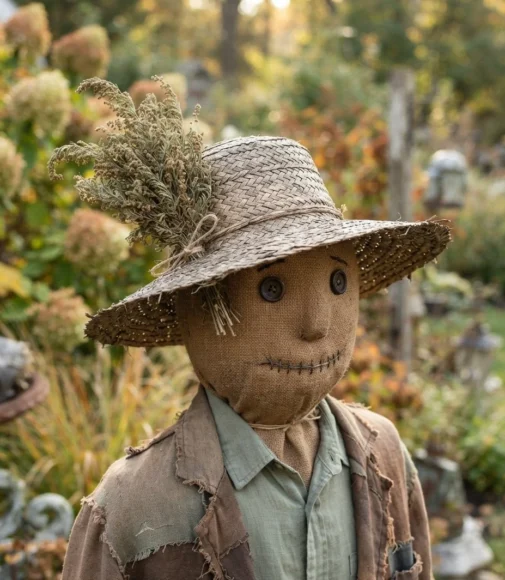
Feels like · dried herbs hanging in a farmhouse kitchen
A small bundle of real dried sweet annie tucked into the hat brim adds fragrance and texture that no artificial floral pick can match.
The Folk-Art Vibe: Herbal, fragrant, and genuinely tied to the harvest season.
Handmade Material and Framing: Wide-brim straw hat, small dried sweet annie bundle wired to the brim.
Weathering and Display Detail: Let the herb dry naturally over the season rather than replacing it, the fading is part of the charm.
14. Hand-Stitched Cross-Stitch Heart Patch
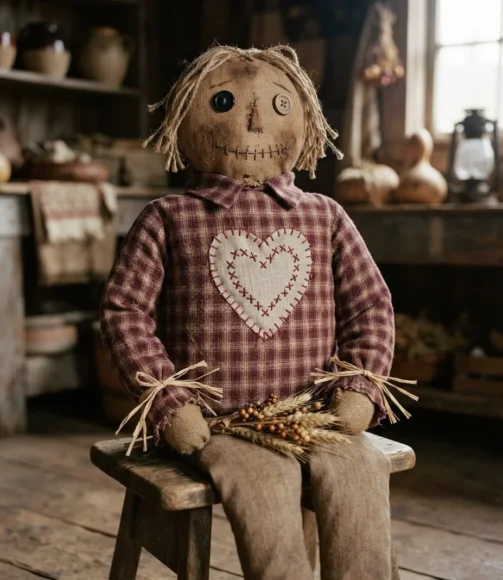
Feels like · a sampler stitched by candlelight
A small coarse cross-stitched heart on the chest is a classic primitive detail that says handmade louder than almost anything else you could add.
The Folk-Art Vibe: Sentimental and sweet, without becoming saccharine.
Handmade Material and Framing: Homespun plaid shirt, embroidery floss heart cross-stitched onto the chest.
Weathering and Display Detail: Keep the stitches deliberately coarse and a touch uneven, a perfect grid reads as machine-made.
15. Wooden T-Frame Yard Stake Scarecrow
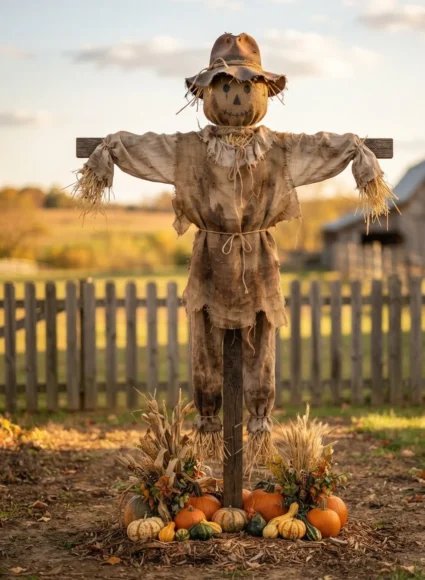
Feels like · a scarecrow standing guard since 1890
This is the most traditional scarecrow silhouette there is, and a deeply anchored T-frame is what actually keeps it standing through a real fall storm.
The Folk-Art Vibe: Classic silhouette, exactly what most people picture first.
Handmade Material and Framing: Wooden cross-stake frame, burlap and muslin clothing loosely draped over it.
Weathering and Display Detail: Stake driven 12 to 18 inches into the ground, straw only at the wrists and ankles.
16. Hay Bale Base with Zip-Tied Anchor
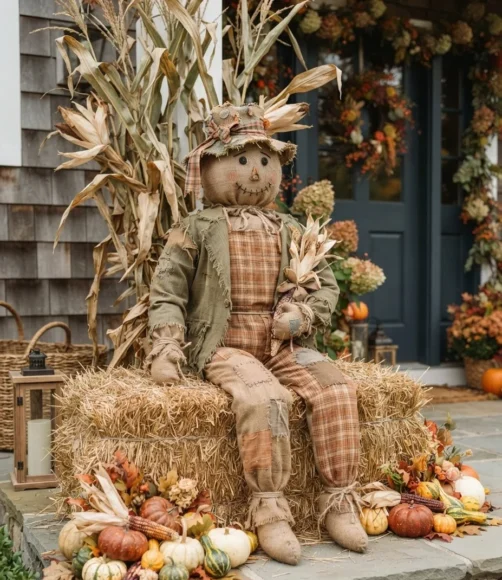
Feels like · a hay wagon ride on a chilly afternoon
A hay bale gives you a sturdy, weighty base without any digging, which makes it the easiest option if you are renting or cannot stake into the ground.
The Folk-Art Vibe: Full harvest display, ready-made for a front yard or entryway.
Handmade Material and Framing: Burlap body frame zip-tied firmly to a real straw hay bale.
Weathering and Display Detail: Corn stalks and mini pumpkins tucked around the base for a layered harvest scene.
17. Mismatched Antique Horn Button Eyes
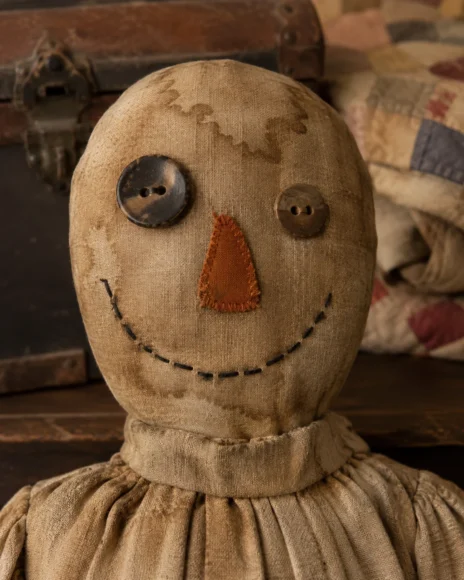
Feels like · a button tin found in an attic trunk
Real antique horn buttons have a natural warmth and slight irregularity that plastic craft store buttons simply cannot fake, even in a close-up photo.
The Folk-Art Vibe: Genuinely thrifted, one-of-a-kind charm.
Handmade Material and Framing: Osnaburg muslin face, two different sized antique horn buttons hand-sewn on.
Weathering and Display Detail: Let the mismatch stay obvious rather than hunting for a matching pair, that is the whole point.
18. Mini Etagere Scarecrow Doll for the Mantel
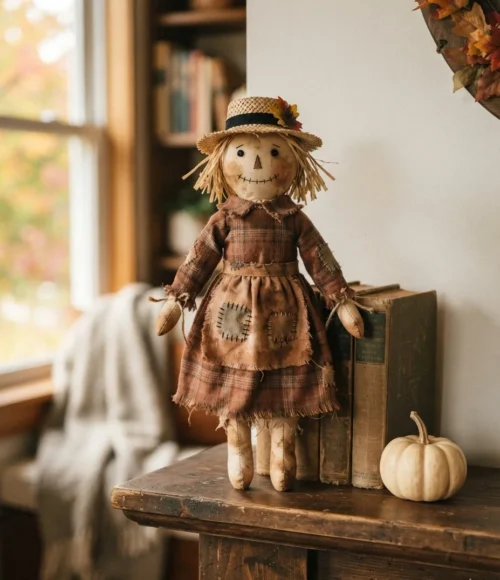
Feels like · a cozy reading nook shelf in October
A small scaled-down scarecrow doll brings the same primitive charm indoors, without needing anywhere near the durability a yard piece requires.
The Folk-Art Vibe: Tiny collectible charm, made for a shelf rather than a porch.
Handmade Material and Framing: Lightly stuffed burlap and muslin doll, roughly a foot tall.
Weathering and Display Detail: Coffee-stained fabric, tiny stitched face, propped against books or a mini pumpkin.
19. Vanilla Cinnamon Stained Homespun Sitter
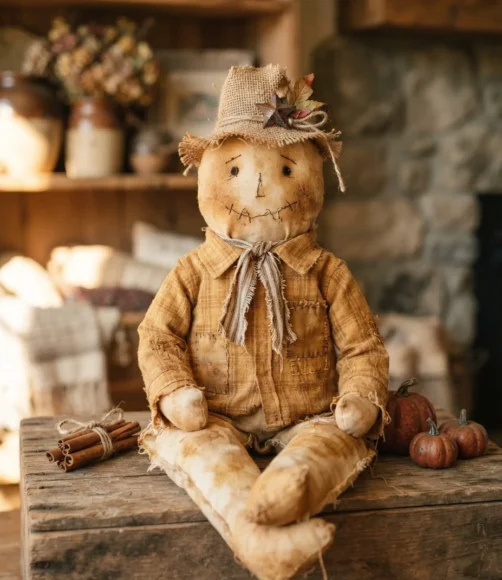
Feels like · warm cider steam curling in the air
Leaning into the cinnamon in your staining bath a little heavier gives this one a warmer, more amber tone than a straight coffee stain alone.
The Folk-Art Vibe: Grubby muslin sitter, warm-toned and genuinely fragrant.
Handmade Material and Framing: Homespun fabric dipped in a heavier cinnamon and vanilla bath, seated pose.
Weathering and Display Detail: Sun-dried rather than oven-baked for a slightly deeper, uneven stain pattern.
20. Straw-Cuffed Wrists Over Hidden Polyfill Body
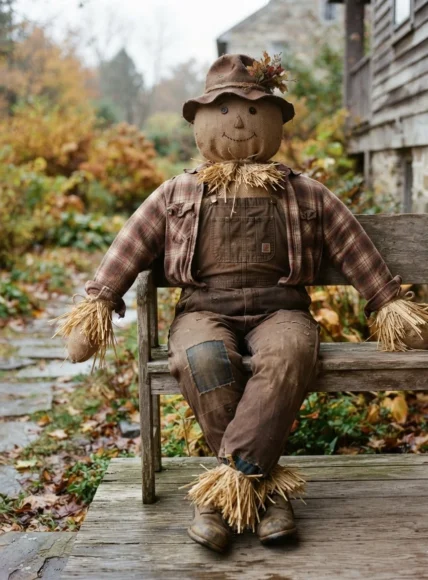
Feels like · a clothesline snapping in an autumn breeze
This is the practical version of the classic straw-stuffed look, all the visible charm with none of the soggy mess after a rainstorm.
The Folk-Art Vibe: Traditional appearance with a genuinely practical build underneath.
Handmade Material and Framing: Shredded outdoor polyfill body, burlap outer shell.
Weathering and Display Detail: Real straw tucked only at wrists, collar, and ankles where it is visible.
21. Rag Doll Companion Beside the Scarecrow
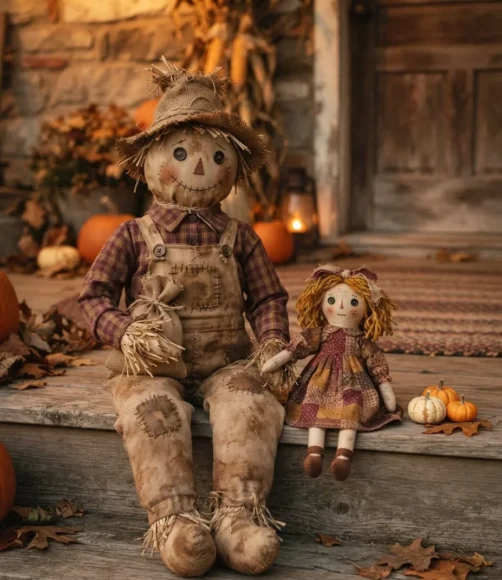
Feels like · two old friends sitting on the porch steps
Pairing the scarecrow with a small handmade rag doll turns a single piece into a little scene, which reads as far more intentional than one figure alone.
The Folk-Art Vibe: A small storytelling scene rather than a single standalone figure.
Handmade Material and Framing: Muslin rag doll with calico patchwork dress, yarn hair.
Weathering and Display Detail: Matching coffee stain wash on both figures so they read as a coordinated pair.
22. Grubby Muslin Scarecrow in a Wheelbarrow Display
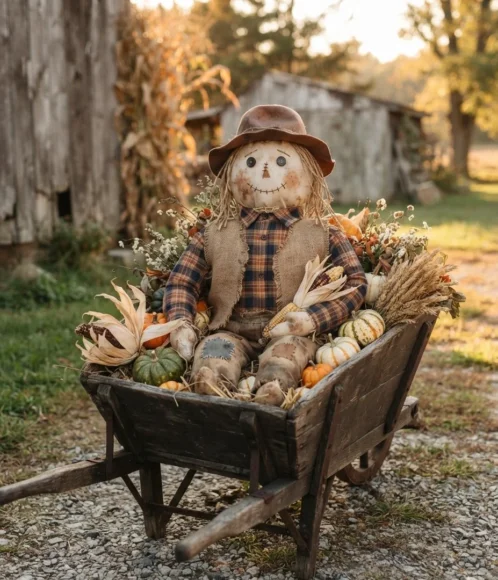
Feels like · the last stop on a hayride through the farm
An old wooden wheelbarrow makes a natural, sturdy container display, and it means you never have to worry about staking anything into the ground at all.
The Folk-Art Vibe: A full harvest vignette, the most photogenic option on this list.
Handmade Material and Framing: Coffee-stained muslin scarecrow seated inside a weathered wooden wheelbarrow.
Weathering and Display Detail: Surround with mini pumpkins, dried corn husks, and a few loose sweet annie sprigs.
Project Cost, Craft Time, and Reusability at a Glance
| Project Type | Approx DIY Cost | Craft Time | Reusability |
|---|---|---|---|
| Mini Etagere Doll | $10 to $20 | 1 to 2 hours | Indoor use, lasts for years |
| Burlap T-Frame Yard Stake | $25 to $45 | Half a day | 2 to 3 outdoor seasons with care |
| Full Porch Rocker Sentinel | $40 to $70 | A full day | 3 to 4 seasons if stored indoors off-season |
| Grubby Coffee-Stained Sitter | $15 to $30 | 2 to 3 hours plus drying time | 2 seasons outdoors, indefinite indoors |
Frequently Asked Questions
How do I keep my primitive scarecrow from getting moldy in the rain?
Build the body out of shredded outdoor polyfill or clean plastic bags instead of real straw, and only tuck real dried straw or raffia at the wrists, collar, and ankles where it actually shows. That keeps the visible texture authentic without soaking through and rotting underneath.
What is the best fabric for an authentic primitive look?
Burlap, homespun plaid, feed sacks, and osnaburg or muslin cotton all bring genuine rustic texture. A coffee, cinnamon, and vanilla staining bath ages any of these fabrics far more convincingly than fabric dye.
How do I make my scarecrow look aged instead of new?
Coffee-staining the fabric, leaving raw and frayed edges, using mismatched antique buttons, and keeping your stitching slightly uneven on purpose are all simple, low-cost details that genuinely age the overall look.
Will my scarecrow blow over in strong wind?
Not if you anchor it properly. Drive a wooden T-frame stake 12 to 18 inches deep into the ground, or zip-tie the frame securely to a heavy wooden rocking chair or a hay bale for enough weight and stability to hold through a real fall storm.
Can I store my scarecrow to reuse it next year?
Yes, as long as it stayed dry through the season. Brush off any loose debris, let it fully air out indoors for a few days before storing, and keep it in a breathable bag rather than sealed plastic to avoid trapping moisture over the winter.
Final Thoughts
Primitive scarecrows earn their charm from restraint and honesty in the materials, real burlap, real coffee stains, real rust, rather than anything shiny or manufactured. The pieces that read as most authentic are almost always the ones with a little imperfection left in on purpose, a slightly crooked smile, a mismatched button, stitching that is not quite straight. Thrifted and vintage materials will always beat anything bought new off a craft store shelf for this exact reason. If this rustic, handmade sensibility speaks to you, it carries just as well indoors through pieces like these primitive living room ideas or a broader moody farmhouse decor scheme that carries the same worn, welcoming feeling into every room.
Start with one technique, the coffee stain, the T-frame anchor, or a single mismatched button face, and build your own personal touches from there season after season. If you are also decorating for the holiday that follows, a few pieces from these farmhouse Halloween decorations carry the same rustic thread right through to November, and a warm glow from farmhouse pendant lighting on the porch finishes the whole scene once the sun goes down. For anyone chasing that same cozy, worn-in nostalgia indoors, these grandmacore home decor ideas are worth a look too. The slightly imperfect, well-worn look is the whole point, so do not worry about making it too neat.