Kitchen Remodel Cost: A Complete Budget Breakdown
A kitchen remodel is one of the most impactful upgrades you can make to a home, but it’s also one of the easiest projects to underestimate financially.
Most homeowners remodel a kitchen every ten to fifteen years, so getting a realistic number before you start collecting quotes saves real stress once the project is actually underway.
Nationally, kitchen remodel costs typically fall between $14,592 and $41,595, averaging around $27,013, or roughly $75 to $250 per square foot depending on size and finish level. Below is the full breakdown: exact material and cabinet pricing, where hidden costs actually hit, and a real $30,000 budget spelled out line by line.
Average Kitchen Remodel Cost Overview
National averages land around $27,000 to $35,000, with most projects falling between $15,000 and $75,000 depending on scope and finish level. At the low end, minor cosmetic updates can start in the mid-teens, while complete luxury renovations regularly exceed $150,000 in high-cost markets. Your actual number depends heavily on where you live, since regional labor rates and permitting complexity shift the average considerably from one metro area to the next.
Kitchen Remodel Cost by Size
Size is one of the clearest cost drivers in any kitchen remodel, since a larger footprint means more cabinetry, more countertop material, and more flooring regardless of finish level. A small kitchen generally runs $15,000 to $25,000, a medium kitchen $30,000 to $50,000, and a large kitchen anywhere from $60,000 to well over $100,000. Some minor cosmetic refreshes on a small kitchen can start even lower, closer to $10,000, when it’s paint and hardware rather than a full gut renovation.
| Kitchen Size | Typical Cost Range |
|---|---|
| Small kitchen | $15,000 – $25,000 |
| Medium kitchen | $30,000 – $50,000 |
| Large kitchen | $60,000 – $100,000+ |
Countertop Material Pricing
“Tile is cheap, stone is expensive” doesn’t actually help you build a budget. Here’s what each material runs installed, per square foot, so you can price your own countertop footprint directly.
| Material | Cost Installed (per sq ft) |
|---|---|
| Quartz | $50 – $120 |
| Granite | $40 – $100 |
| Butcher Block | $35 – $70 |
| Laminate | $15 – $40 |
Cabinet Tier Pricing
Cabinets are the single biggest line item in almost every kitchen budget, so this is the number worth pricing carefully before you fall in love with a fully custom design. Rates are per linear foot, installed.
| Cabinet Tier | Cost per Linear Foot |
|---|---|
| Stock (IKEA, Home Depot) | $100 – $300 |
| Semi-Custom | $200 – $650 |
| Fully Custom | $500 – $1,200+ |
Where Your Money Actually Goes
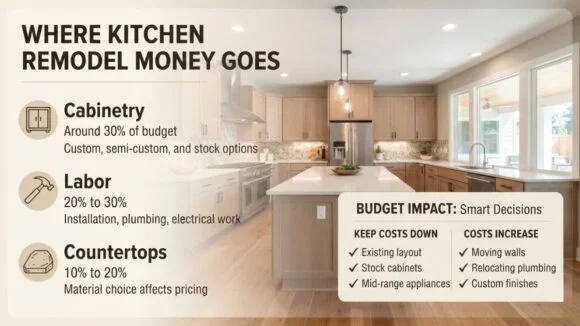
Cabinets account for roughly 30 to 40 percent of the total budget depending on whether you choose stock, semi-custom, or fully custom. Labor covers installation, plumbing, and electrical work tied to the remodel, typically 20 to 30 percent of the total. Countertops generally account for another 10 to 20 percent, with material choice swinging that number significantly based on the pricing above.
Real Example: How to Spend a $30,000 Budget
Percentages are only useful once you see them turned into an actual purchase list. Here’s a real mid-range breakdown for a $30,000 budget, category by category.
| Category | Budget Share | Amount | What You Get |
|---|---|---|---|
| Cabinets | 30% | $9,000 | Semi-custom plywood boxes, Shaker doors |
| Labor & Install | 25% | $7,500 | General contractor, electrician, plumber |
| Countertops | 15% | $4,500 | 40 sq ft entry-level quartz, sink cutouts |
| Appliances | 15% | $4,500 | Stainless steel 4-piece package |
| Backsplash & Flooring | 5% | $1,500 | Subway tile, luxury vinyl plank |
| Contingency | 10% | $3,000 | Buffer for plumbing or electrical surprises |
Labor Cost Breakdown
Labor isn’t one number, it’s several trades billing separately, and knowing the going rate for each helps you sanity-check a contractor’s quote line by line.
- General Contractor: 15% to 25% of total project cost
- Electrician: $65 to $130 per hour, GFCI outlets and recessed lighting
- Plumber: $75 to $150 per hour, moving gas lines and sink drains
- Tile Installer: $5 to $15 per sq ft
Budget, Mid-Range, and High-End Tiers
Kitchen remodels break down into three rough tiers, and knowing which one you’re actually planning for sets realistic expectations before you start collecting quotes. A budget-friendly facelift, new paint, updated hardware, refreshed lighting, keeps the existing layout and cabinetry in place. A mid-range remodel typically replaces cabinets, countertops, and appliances while keeping the existing footprint. A high-end renovation usually involves layout changes, custom cabinetry, and premium finishes throughout, which is where costs climb well past $100,000 for larger spaces.
Hidden Costs Nobody Budgets For
A 15 to 25 percent contingency is standard advice, but it helps more to know exactly where that emergency money tends to actually go once the walls are open.
- Permits & inspection fees: $500 to $2,000, depending on your city
- Demolition & dumpster rental: $1,000 to $3,000
- Old code upgrades: $1,500 to $4,000 for an older home’s electrical panel or plumbing line replacement
- Eating out budget: $1,000 or more for the 4 to 8 weeks the kitchen is out of commission
Factors That Affect Your Cost
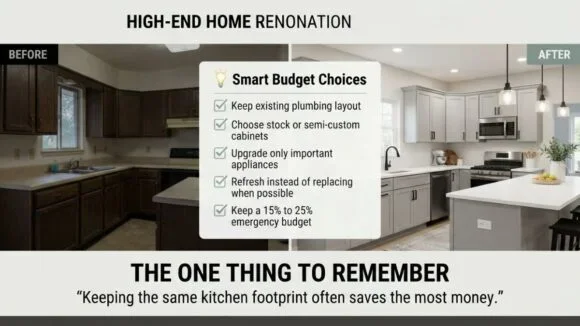
Beyond size and finish tier, a handful of specific factors genuinely swing your total cost up or down. Layout changes matter more than almost anything else, moving plumbing, walls, or electrical adds real complexity, even when it dramatically improves how the finished kitchen functions. Region plays a major role too, certain metro areas run well above the national average due to labor rates, permitting complexity, and local material expectations.
Kitchen Remodel Return on Investment
A kitchen remodel is one of the few home projects that pays back a genuinely meaningful share of its cost at resale, though the return varies by scope. Minor remodels show notably strong payback, with returns near 113 percent nationwide, meaning a well-executed minor update can add more resale value than it actually cost. Larger, full-scope remodels return less proportionally, with mid-range major remodels typically recouping around half their cost, and upscale renovations returning a smaller share still.
Ways to Save Without It Looking Cheap
A handful of genuinely effective choices bring your total cost down without making the finished kitchen feel cheap. Keeping your existing layout avoids the real added cost of moving plumbing or walls entirely. Choosing stock or semi-custom cabinetry over fully custom pieces saves considerably, since custom work regularly runs two to three times the cost of a comparable stock option. Stepping down one tier on appliances, a solid mid-range refrigerator instead of a premium built-in, frees up real budget for the cabinets and countertops you actually see and touch every day.
- Keep the existing layout and plumbing.
- Choose stock or semi-custom cabinets.
- Step down one tier on appliances specifically.
Frequently Asked Questions
What is the average cost of a kitchen remodel?
The national average generally falls around $27,000, with most projects landing between $15,000 and $75,000 depending on size and finish level.
Cabinetry is typically the single largest expense, making up 30 to 40 percent of the total budget, followed by labor and then countertops.
Does a kitchen remodel actually pay for itself when you sell?
Minor remodels tend to return a very strong share of their cost, sometimes exceeding the original investment, while larger, full-scope remodels typically return a smaller proportional share at resale.
How much should I budget for unexpected costs?
Set aside an additional 15 to 25 percent of your total budget. Permits, demolition, old code upgrades, and a few weeks of eating out all draw from this buffer before the project’s done.
Is it cheaper to keep my kitchen’s existing layout?
Yes, keeping plumbing, walls, and electrical in their current positions avoids significant added labor and permitting costs compared to a full layout change.
Final Thoughts
A kitchen remodel’s real cost depends on far more than square footage, size, layout changes, material tier, and your specific region all shape the final number considerably.
Set a realistic budget before you start collecting quotes, and build in a genuine 15 to 25 percent contingency so the project doesn’t become a financial surprise partway through.
Before you demo anything, get three separate fixed-price bids, not open-ended “time and materials” quotes, national averages help with early planning, but a fixed bid from a local contractor tells the truer story for your specific home.
This article provides general cost information to help you plan, not a guaranteed quote. Actual costs depend on your specific project and location.